Our Work
Field-based research, education, and partnerships advancing wildlife conservation and resilient landscapes across the Borderlands.
Application of a Denning Habitat and Chronology Model to Trans-Pecos Black Bears
By Jake B. Gowdy, Matthew O. Hewitt, Amanda V. Dutt, and Dr. Louis A. Harveson
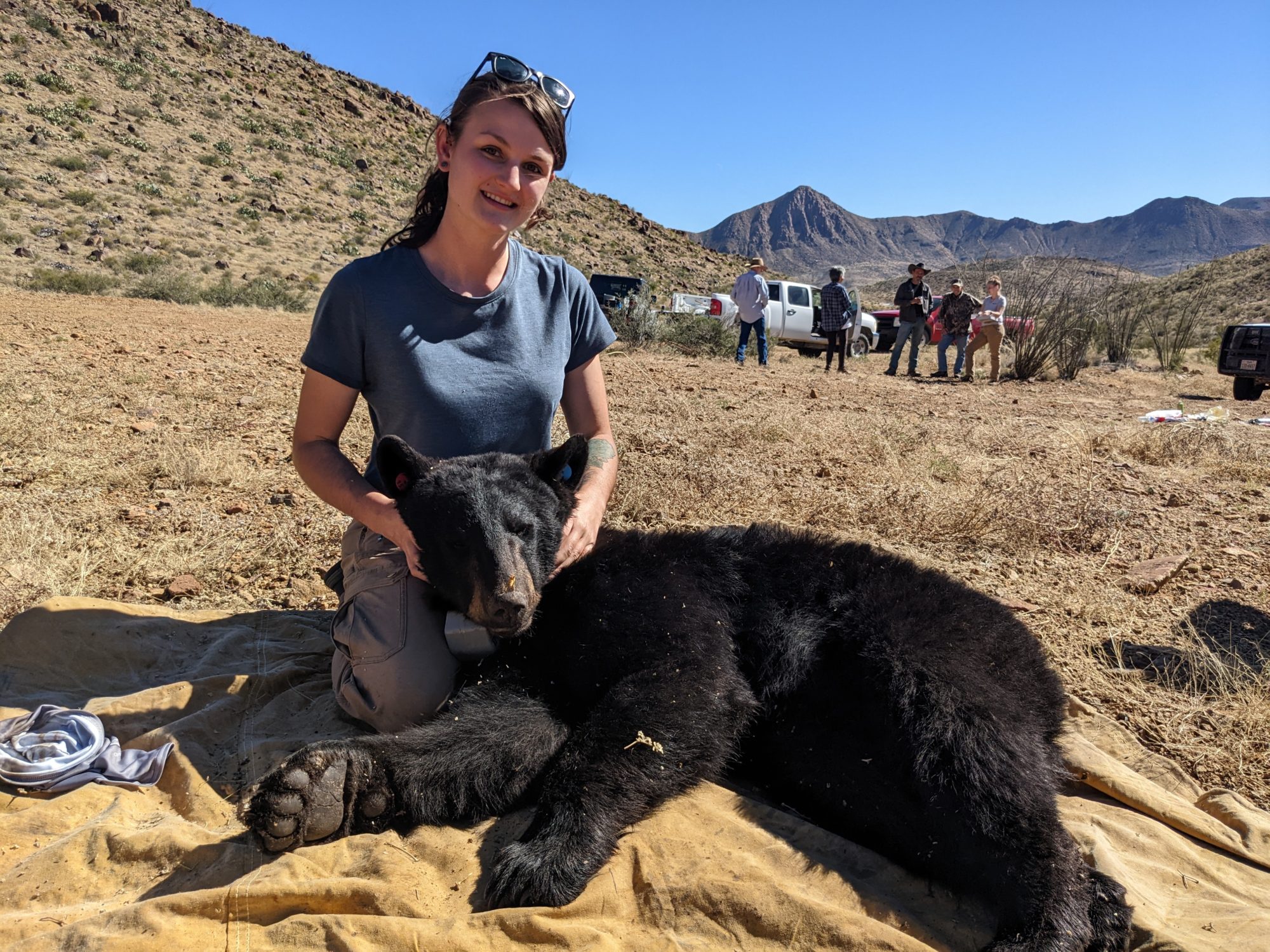
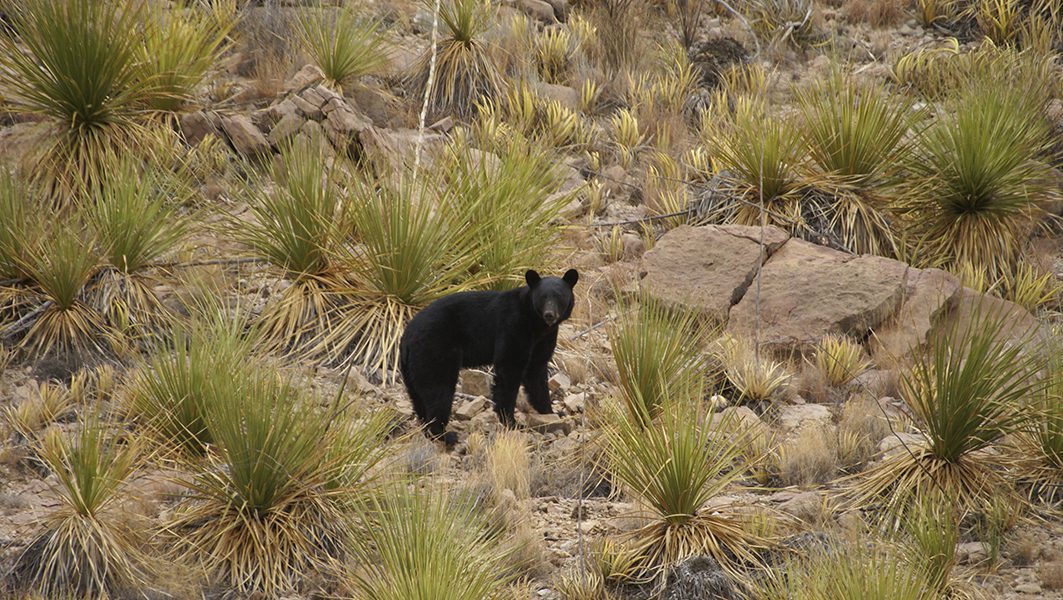
Black bears (Ursus americanus) were extirpated from the Trans-Pecos region of Texas in the late 1950s, primarily due to early predator control efforts and increases in anthropogenic infrastructure. The designation of bears as threatened at the state level, coupled with the close proximity of Big Bend National Park to remnant black bear populations in northern Mexico, facilitated recolonization of the species back into the state in the late 1980s. Bears have since continued to expand into the greater Trans-Pecos region, with sightings as far north as Fort Davis, TX, and as far east as Uvalde. Denning is an incredibly critical part of black bear ecology, providing a safe environment for the birth of altricial cubs and an escape from winter food instability. Understanding the mechanisms driving denning behavior in desert environments will be essential for the proper management of black bears and their denning habitat in Texas.
We plan to fit a denning habitat suitability model to determine what habitat and anthropogenic factors bears are selecting for or avoiding. Data will consist of these factors at used den locations, and at a series of paired locations within distance buffers (4000m, 1000m, 300m) of each used location. By comparing the variables between used den locations and their paired randomly selected locations, we can estimate the direction and strength of selection exhibited by bears in the region.
We plan to remote sense the vegetation data needed by capturing our study area with an airborne LiDAR sensor, allowing us to increase our sample size by a large margin. We will also be examining climate conditions, alongside anthropogenic food use, to understand what factors may be predictive of black bear den entrance and emergence.
The ability to identify den sites so that land managers can make appropriate recommendations will not only protect bears during a critical period of their lives, but also decrease human-bear conflict potential. This project will inform managers what habitat characteristics are critical for black bear denning and provide a new use case for LiDAR in wildlife biology.