Our Work
Field-based research, education, and partnerships advancing wildlife conservation and resilient landscapes across the Borderlands.

Fine-scale Behavior and Denning Patterns of the Recolonizing Black Bear Population
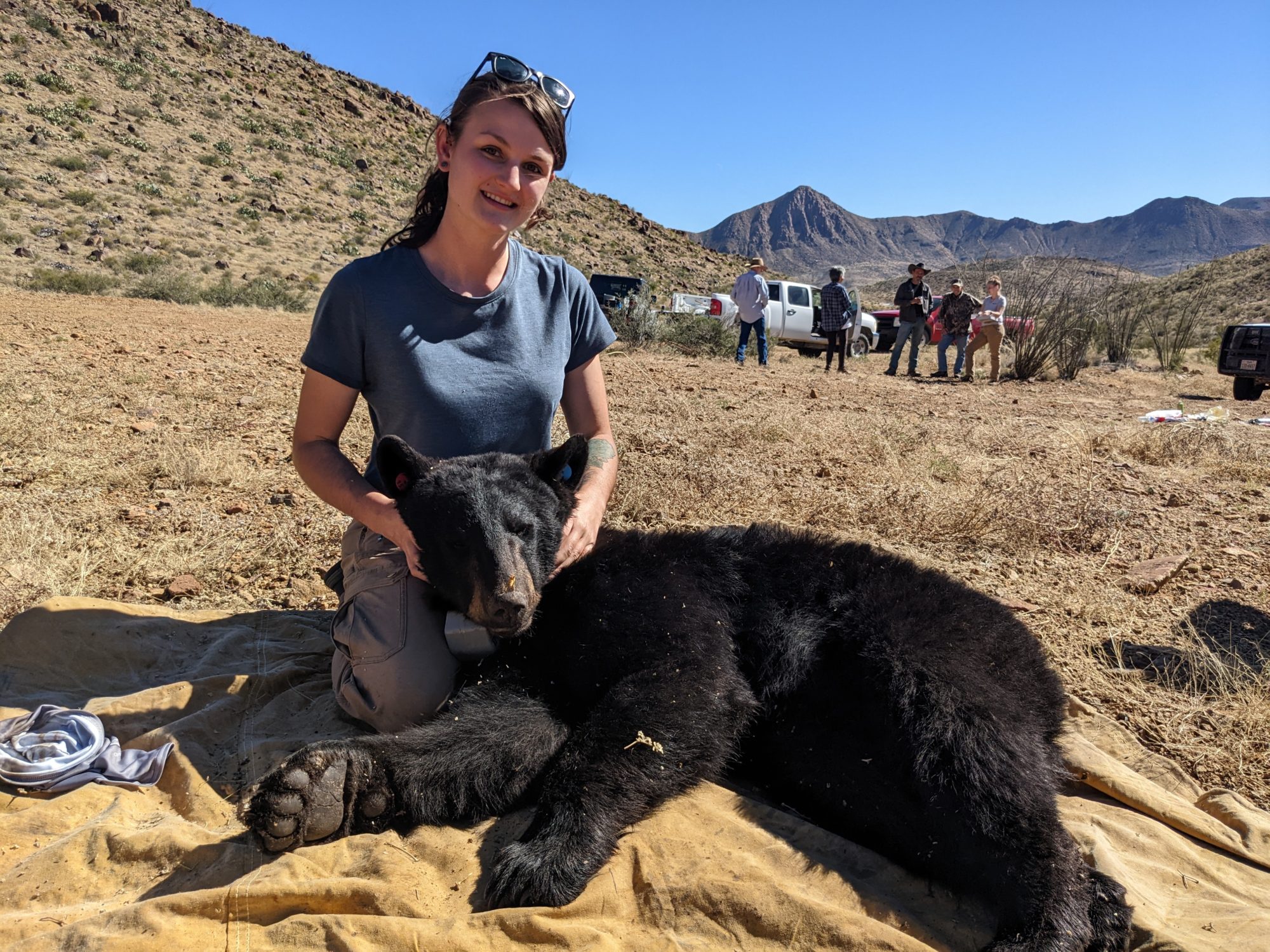
Nicole Dickan, Matt Hewitt, Amanda Veals Dutt, Justin French, and Dr. Louis Harveson
Since the 1980s, black bears (Ursus americanus) have been undergoing a natural recolonization of West Texas after being extirpated from the state 40 years earlier through predator control, unregulated hunting, and loss of habitat.
Previous research on this population was conducted in the early 2000s, but there is a strong need for updated understanding of bears in this region as they continue to recolonize farther into the state, especially with human-bear conflicts on the rise. This project is the first to put GPS collars on this population of bears and the first examination of fine-scale movement and behavior.
To investigate a wide range of behaviors, we will conduct cluster site investigations. At a cluster site, a radio-collared animal spends a prolonged period of time in one area, showing up as a concentrated group of GPS points. We will identify locations where bears had 3 or more GPS points within 50 meters of each other (minimum of 6 hours spent in an area). We will then investigate a sample of these cluster sites in the field to determine if bears are resting, foraging for vegetation, or consuming prey. Finally, we will determine habitat selected by bears when exhibiting each of these behaviors.
The second component of our project will focus on unique behaviors of winter denning in the hot, arid climate of the Chihuahuan Desert within the Trans-Pecos. We aim to:
- locate, classify, and measure dens
- record timing of denning
- classify fine-scale habitat characteristics surrounding den sites
Den sites are crucial for bear survival and reproduction. Information on winter behavior is crucial for bear population management, particularly for this newly recolonizing population.
This research will help inform management of black bears by the Texas Parks and Wildlife Department and ultimately assist these bears on their journey toward a successful recolonization and subsequent coexistence with humans.