Our Work
Field-based research, education, and partnerships advancing wildlife conservation and resilient landscapes across the Borderlands.
Avian community response to removal of encroaching woody vegetation in Trans-Pecos grasslands
By: Audrey Taulli, Dr. Carlos E. Gonzalez, Dr. Justin T. French, and Dr. Maureen G. Frank
What does restoration look like?
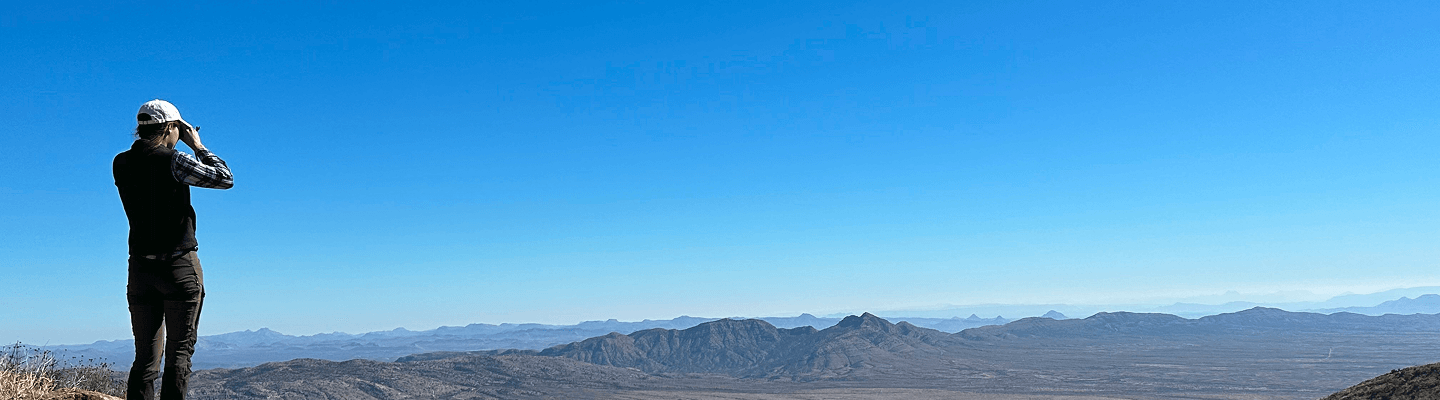
Grassland habitat is one of the fastest-declining habitat types in the world, and grassland-reliant bird populations have followed the same trend. This decline is attributed to habitat loss, fragmentation, and degradation through overgrazing, conversion for human use, and woody plant encroachment.
Starting in 2019, we applied herbicides to combat western honey mesquite, creosote, and tarbush on private ranches located in the Marfa and Marathon grasslands. We conducted bird surveys in treated and untreated areas to understand whether bird communities differed. In 2023, we used roller-chopping to mechanically remove herbicide-treated mesquite on one property. This was done to understand whether herbicide alone could restore grasslands from a grassland-reliant bird point of view, or whether removal of the treated shrubs is also necessary.
We surveyed birds every winter from 2019 to 2025 across the different treatments, untreated areas, and a control property that served as a reference grassland. We then analyzed whether the bird communities in any of the treated shrubland plots were becoming more like the bird communities found within the grassland habitats. Untreated plots and plots treated with only herbicide became increasingly dissimilar to grassland plots over time. The combination-treated plots, however, became more similar to the grassland plots, meaning that the bird communities shifted to have more of the same species and relatively similar abundances.
Our study showed that the structure of the brush, regardless of whether the plant is alive, can negatively impact grassland bird species. Effective treatment of encroaching woody vegetation that positively impacts grassland-reliant birds requires integrated brush management that completely removes the brush from the landscape.