Our Work
Field-based research, education, and partnerships advancing wildlife conservation and resilient landscapes across the Borderlands.

MOUNTAIN LION DIET ON PRIVATE LANDS
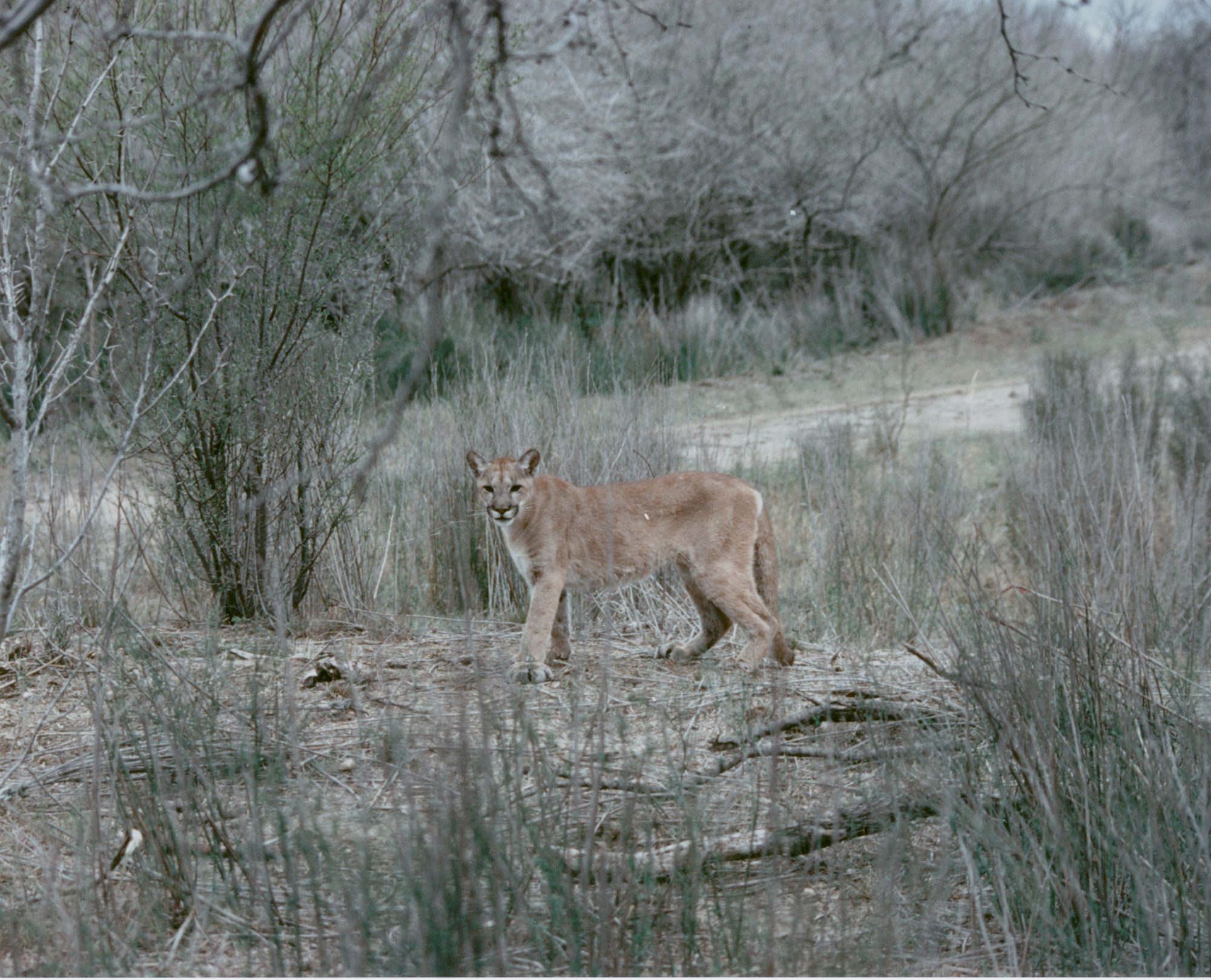
Amanda Veals Dutt, Catherine Dennison, Patricia Moody Harveson, Bert Geary, Ron Thompson, Dana Milani, and Louis Harveson
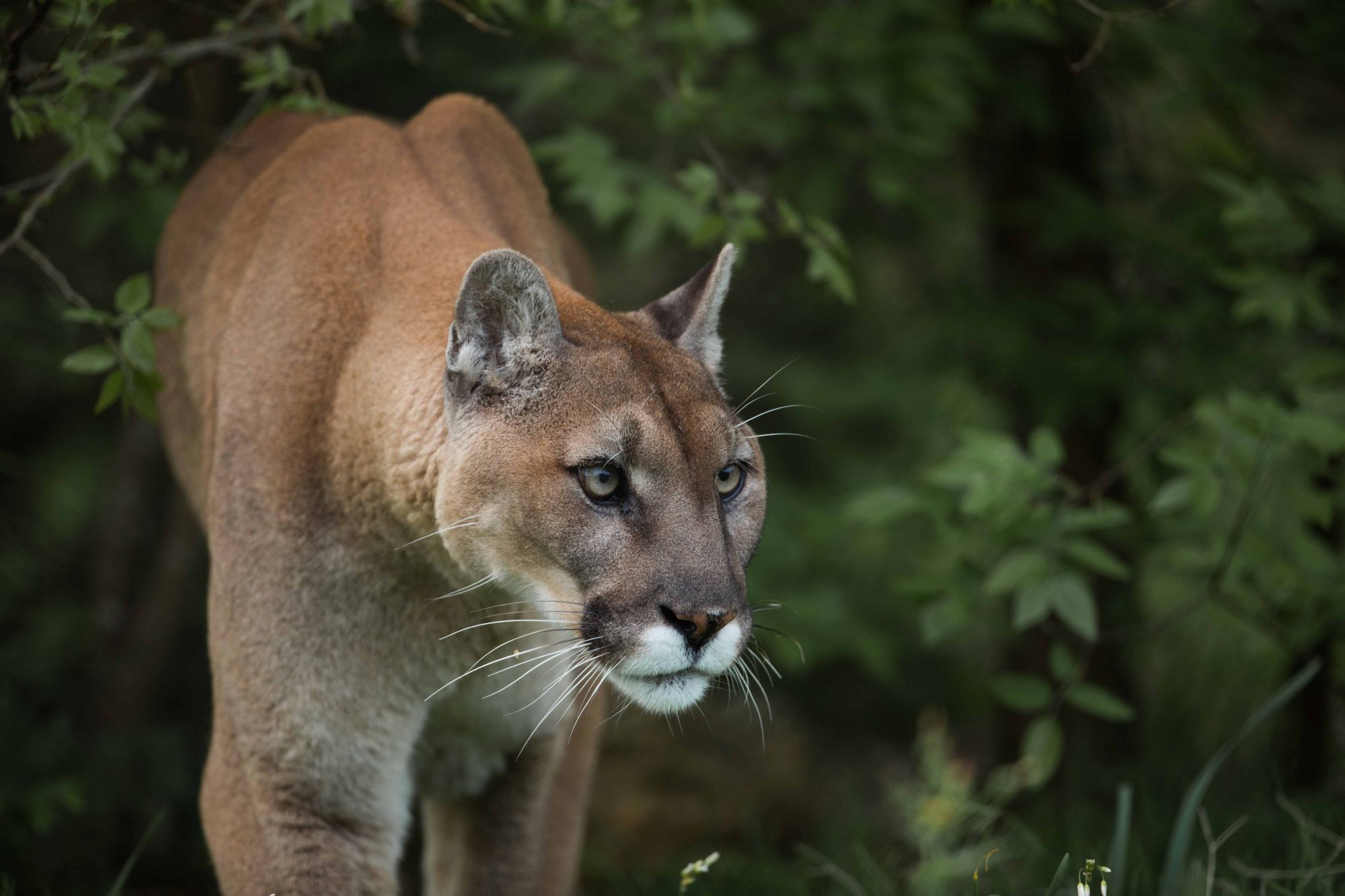
We examined predatory behavior of mountain lions (Puma concolor) on privately owned lands in the Davis Mountains. We used GPS (global positioning system) data from 16 radio collared mountain lions (10 females, 6 males) to investigate 200 confirmed kill sites. We wanted to examine mountain lion diet as a first step toward understanding predator-prey dynamics in the Davis Mountains.
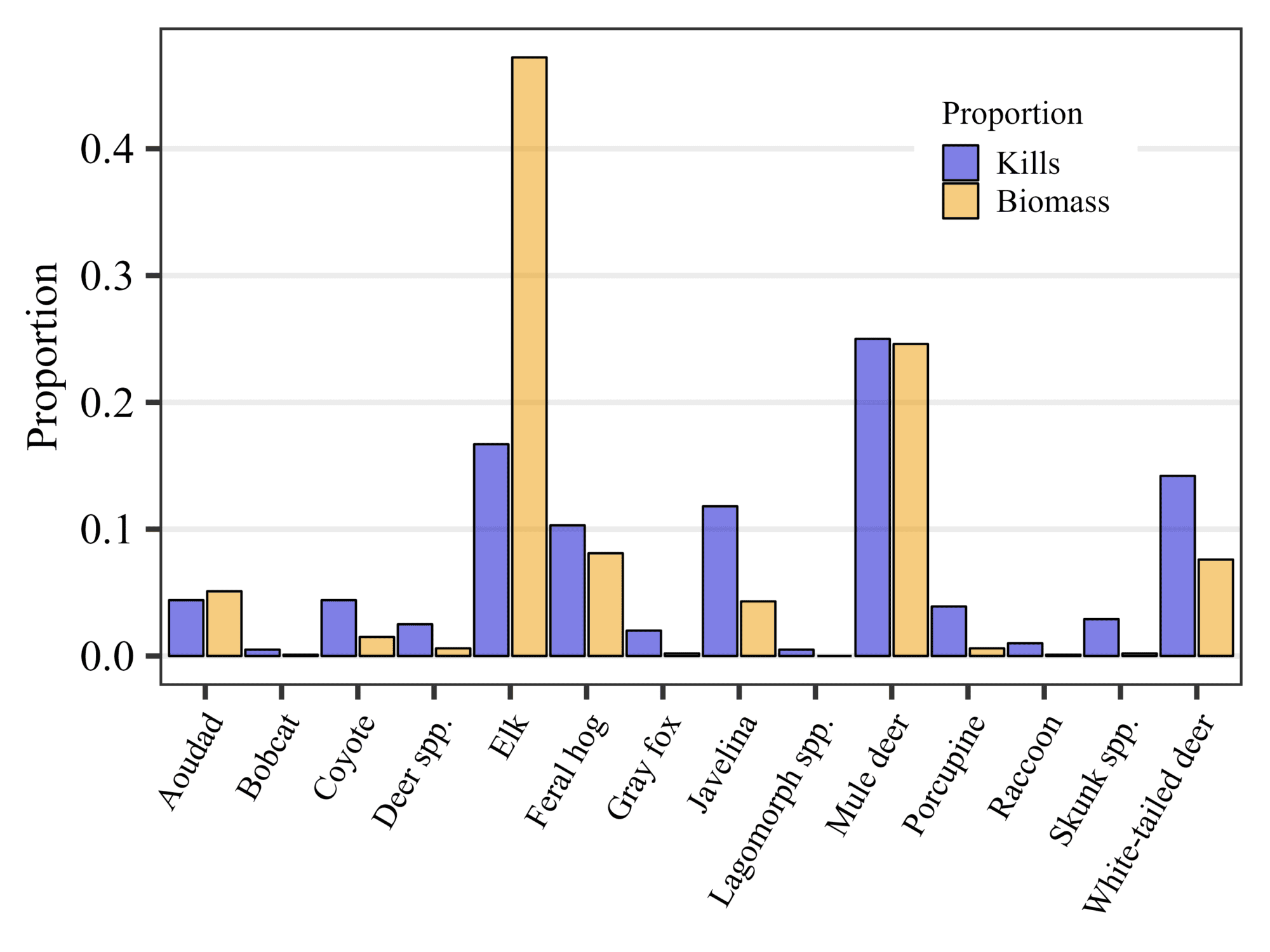
Mountain lions used a wide variety of prey and did not rely on one prey species. They predated on 14 different prey species or taxonomic groups including ungulates, mesocarnivores, lagomorphs, and rodents. The top prey species (80% of diet) were mule deer (Odocoileus hemionus), white-tailed deer (Odocoileus virginianus), elk (Cervus elaphus), feral hog (Sus scrofa), and javelina (Pecari tajacu). We estimated the live weight of each prey item to determine biomass consumed at kills.
Male mountain lions were significantly more likely to prey on javelina than females. While mule deer were the most common species preyed upon (25% of kills), elk made up the largest percent biomass consumed (47%). Seasonal differences showed elk were most likely to be predated during the ungulate birthing season (May–August), while mule deer were more likely to be taken during the rut (November–February). Importantly, livestock (e.g., domestic cattle and horses) were available in the study area yet were never preyed upon.
Prey use and diet of large carnivores can have important impacts on food webs, wildlife management, and human conflict. Mountain lions are large, apex predators that are commonly controlled for livestock depredation and ungulate population management strategies. Our results on mountain lion diet can provide important ecological information for managers of both predator and prey.