Our Work
Field-based research, education, and partnerships advancing wildlife conservation and resilient landscapes across the Borderlands.
Recent Bighorn Restoration: Big Bend Ranch State Park
By Thomas S. Janke, Patricia M. Harveson, Kevin M. Urbanczyk, Froylan Hernandez (TPWD), and Louis A. Harveson
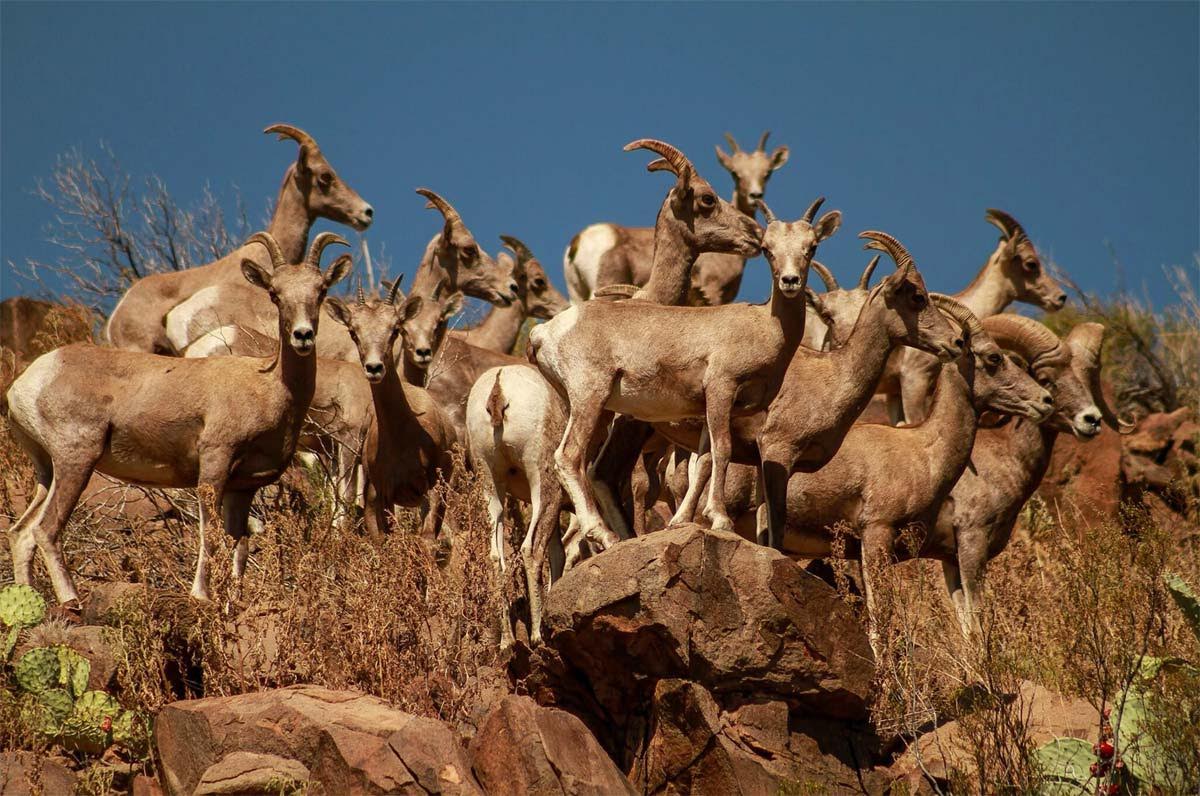
In 2010 and 2011, 141 sheep were captured and transplanted to Big Bend Ranch State Park (46 from Elephant Mountain Wildlife Management Area and 95 from the Beach, Baylor, and Sierra Diablo mountain ranges), the largest desert bighorn translocation effort in Texas history.
The translocation had two purposes: to restore desert bighorn sheep to the historic habitat of the Bofecillos Mountains and to help alleviate the pressure of burgeoning populations. Population growth rates, coupled with browse evaluations, suggested bighorn populations were at or near carrying capacity in the Beach, Baylor, and Sierra Diablo mountain ranges.
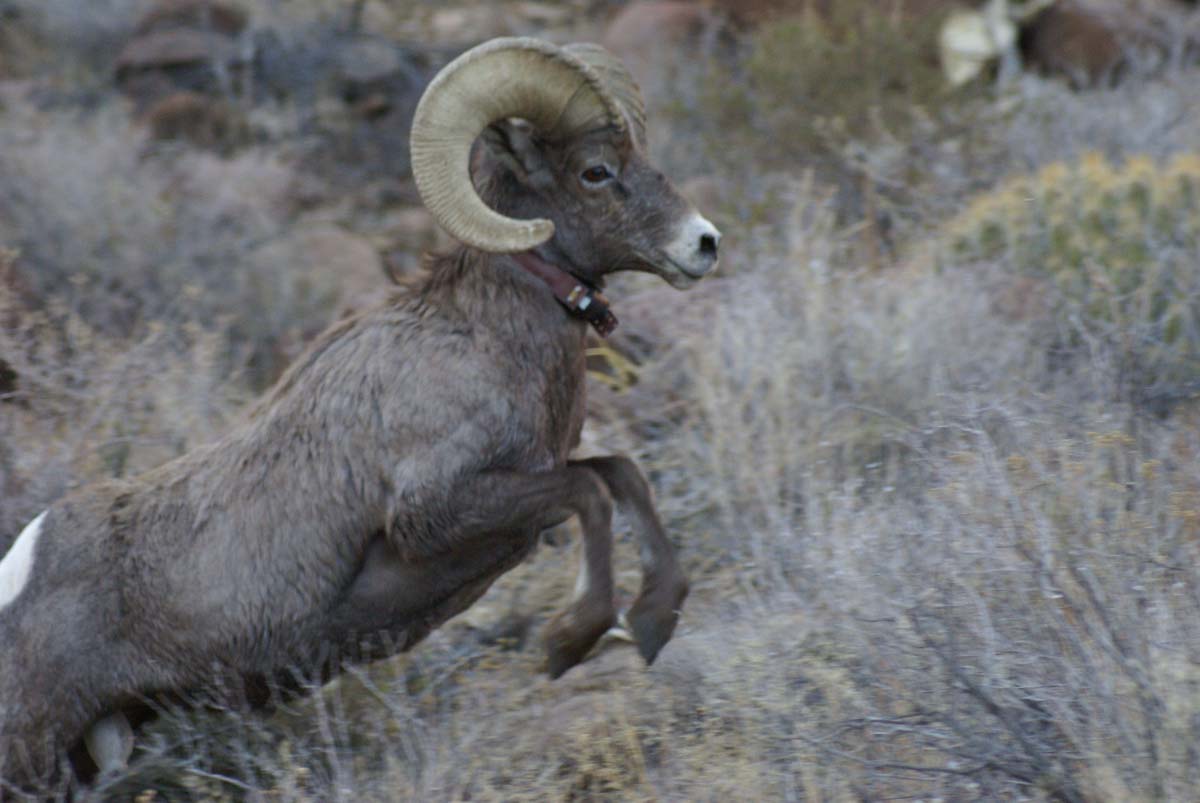
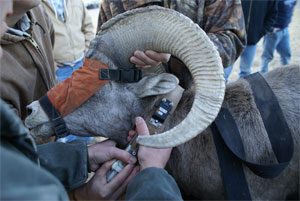
Of the 141 sheep transplanted to Big Bend Ranch SP, 78 were radio-collared for research analysis. These collars collect and save location points every 3–5 hours for up to 2 years. This information allows us to see sheep movement without visually spotting or tracking individuals daily.
Armed with this information, we can compare movements, home ranges, and core areas between rams and ewes; diurnal and nocturnal locations; and behaviors of initial and supplemental sheep. We can analyze topographical tendencies (such as slope, elevation, aspect) to help delineate preferred travel corridors, increasing knowledge for future restoration efforts.
Of 78 collared sheep, 15 have died. Based on carcass investigations, we determined that at least seven were killed by mountain lions. Evidence at the mortality sites did not allow us to determine the cause of death for the other eight.
With the collected GPS data to date, the farthest a sheep traveled from the release site was more than 25 miles. Sheep were documented crossing back and forth into Mexico, which emphasizes the need for international conservation efforts in Texas and Mexico.