Our Work
Field-based research, education, and partnerships advancing wildlife conservation and resilient landscapes across the Borderlands.

Bighorn Use of Escape Cover
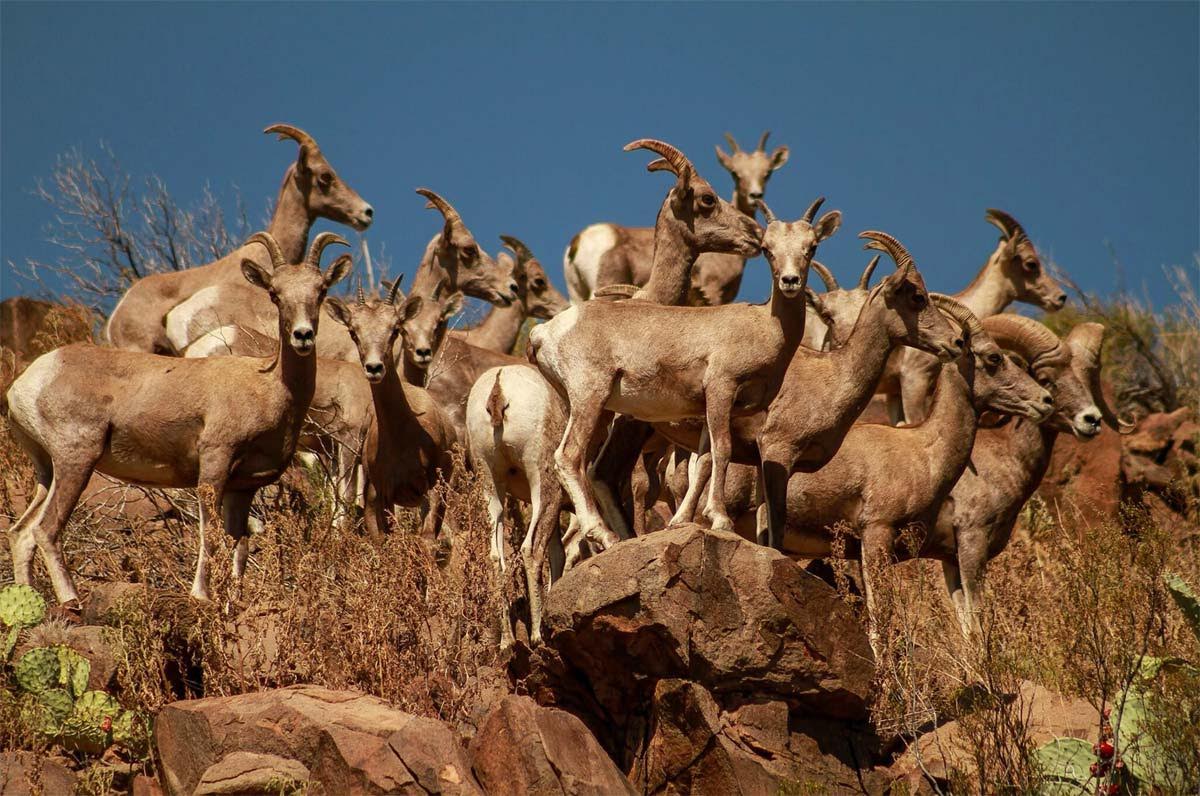
One of the most critical elements of desert bighorn sheep habitat is cover. Rugged topography or escape terrain is considered to be the most important aspect of desert bighorn sheep habitat, providing areas for predator avoidance, lambing, and bedding.
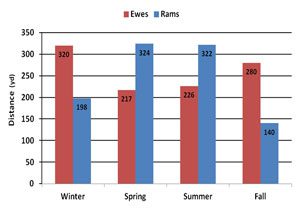
At Elephant Mountain WMA, radio-collared bighorn sheep were monitored to determine habitat use. Habitat variables considered included percent slope, elevation, aspect, habitat classification, distance to permanent water, and distance to escape terrain.
Most of the habitat use differentiation between ewes and rams appears to be related to the lambing season, when ewes and rams segregate. While ewes appear to use areas that minimize risk of predation to offspring, rams may exploit areas that offer better nutrition needed after the stressful breeding season. This segregation may also help reduce intraspecific competition.
Overall, ewes remained within 250 yards of escape terrain, while rams generally stayed within 300 yards of escape terrain. Both ewes and rams preferred the steepest slopes available (40–79%). However, when ewes and rams segregated, rams used a wider range of slopes (20–79%) to exploit areas with better forage. Both ewes and rams preferred elevations from 4,500 to 5,100 feet. Lower elevations were avoided because they lacked sufficient escape terrain.
Desert bighorn also avoided thick brush cover. Because bighorns rely on visual detection of predators, areas that offer ambush by predators are generally avoided.