Our Work
Field-based research, education, and partnerships advancing wildlife conservation and resilient landscapes across the Borderlands.
Distribution of High-elevation Owls in the Davis Mountains, Texas
By Shelby duPerier, Romey Swanson, Dr. Justin French, Dr. Clint Boal, and Dr. Maureen Frank
Which owl species are present during the breeding season in the Davis Mountains, and how do their vocalizations vary during this time?
As habitat loss, climate change, and species extinctions accelerate, documenting species occurrence is increasingly critical for informing conservation and management decisions. Elevation-dependent owls in the southwestern United States are particularly vulnerable, as they rely on isolated mountain ranges that provide cooler, wetter conditions within an otherwise arid landscape. The suitability of these “sky islands,” however, is threatened by rising temperatures, prolonged drought, and disturbance events such as bark beetle outbreaks and forest fires, placing additional pressure on owl species with already restricted distributions.
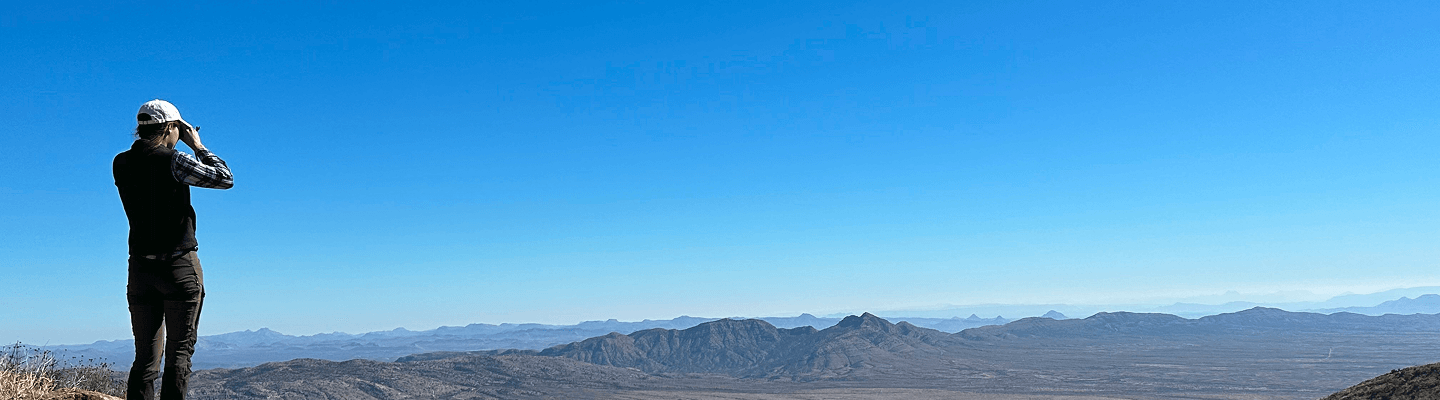
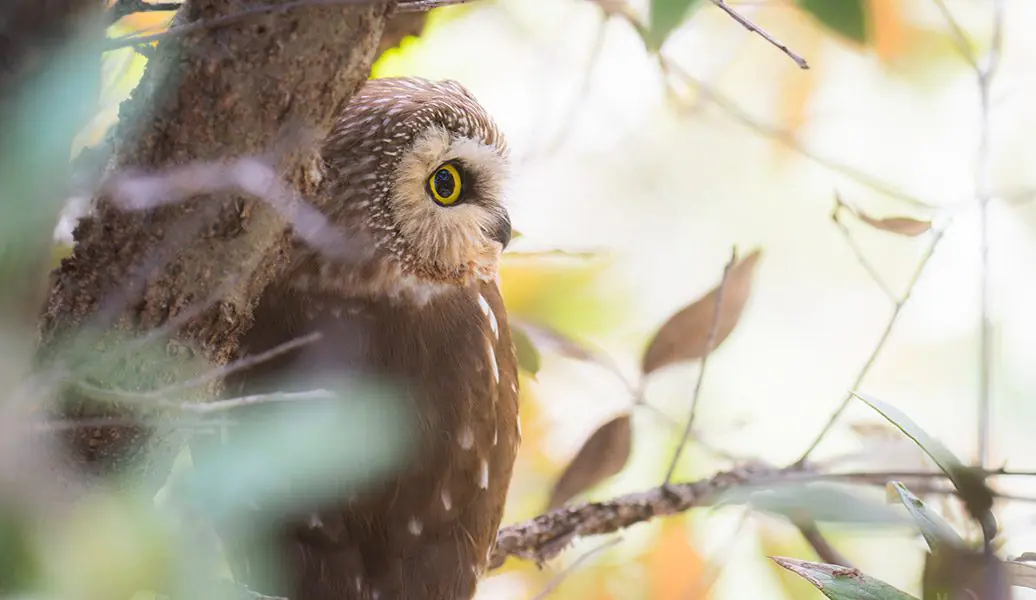
The Davis Mountains—located within the Chihuahuan Desert in the Trans-Pecos region of Texas—contain steep canyon watersheds and pine-oak woodlands that provide essential breeding and foraging habitat for three rare, high-elevation owls: flammulated (Psiloscops flammeolus), northern saw-whet (Aegolius acadicus), and Mexican spotted (Strix occidentalis lucida). Monitoring these species is challenging due to their elusive behavior, low densities, and the remoteness of this rugged mountain range. However, recent advances in bioacoustics have enabled more cost-effective and scalable approaches for studying rare and cryptic species, particularly through passive acoustic monitoring using autonomous recording units (ARUs).
To evaluate the presence and occurrence of three high-elevation owl species, we monitored owl vocalizations within the Davis Mountains Preserve using ARUs. A pilot study conducted in 2023 confirmed the presence and detectability of all three species. During the 2024 and 2025 breeding seasons (March-August), ARUs were deployed in high-quality owl habitat across the preserve. The objectives of this study are to 1) estimate target species’ occurrence at each ARU, 2) identify peak calling activity and seasonal timing for target owls and the broader owl community, and 3) infer the behavioral drivers of vocalizations for flammulated and northern saw-whet owls. These results will provide insight into the owl community of the Davis Mountains Preserve and inform management decisions related to the timing and conservation of rare and cryptic owl species.