Our Work
Field-based research, education, and partnerships advancing wildlife conservation and resilient landscapes across the Borderlands.
Using passive acoustic monitoring to assess Montezuma habitat use and population dynamics
By David Tonnessen, Maureen Frank, Holger Klinck, and Ryan Luna
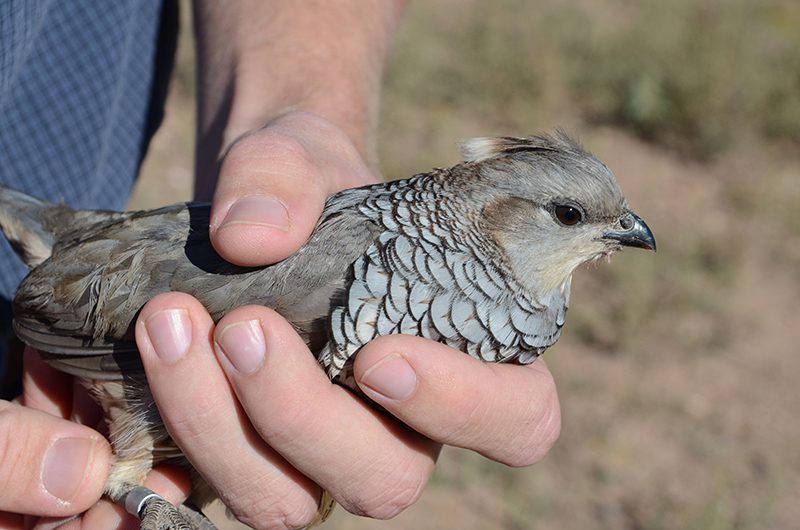
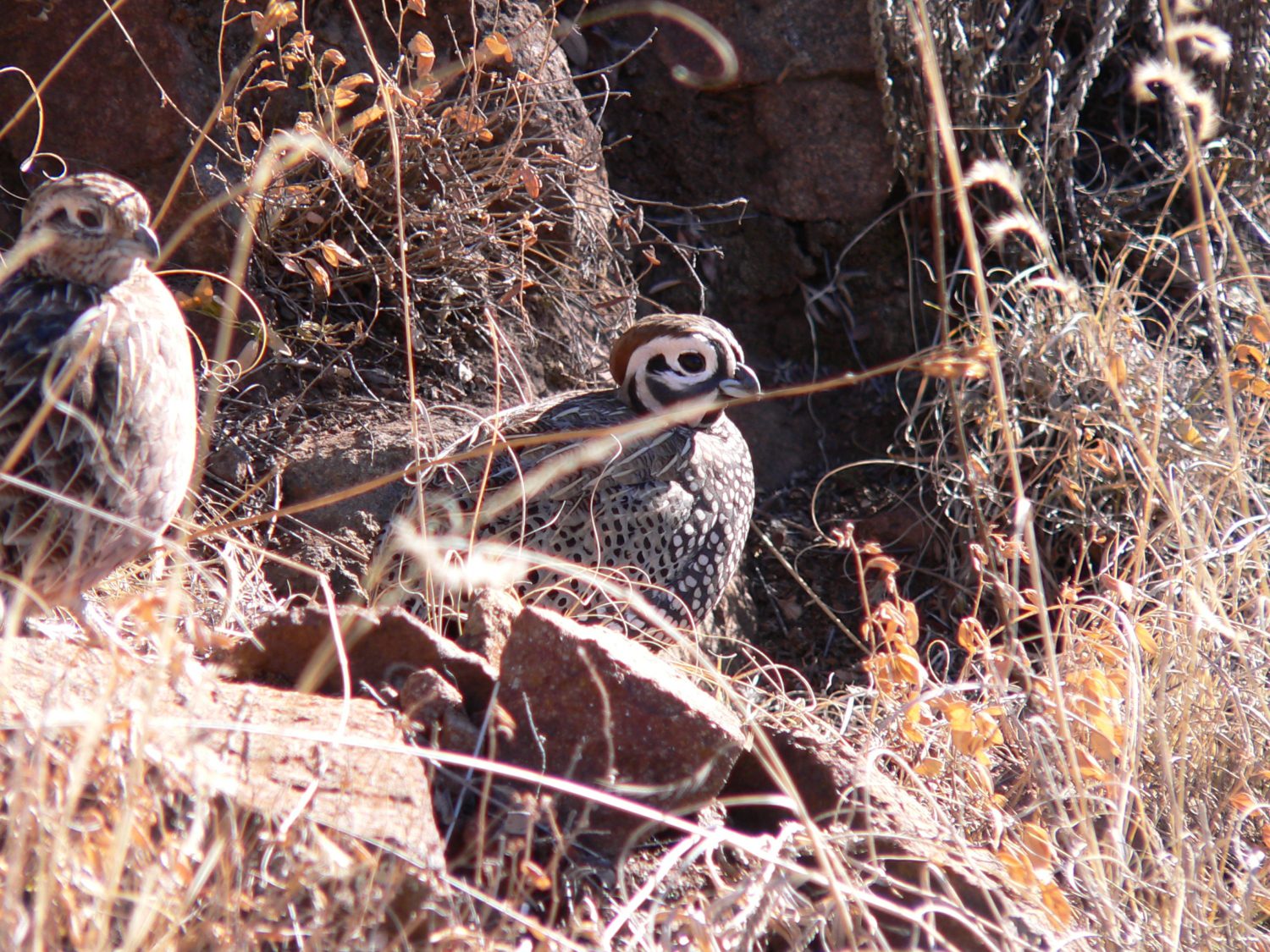
While Passive Acoustic Monitoring has been touted as an efficient and cost-effective method of monitoring wildlife, it has largely been deployed for cetaceans, songbirds, and amphibians. Effectively surveying for members of Galliformes requires different methods than for songbirds. Due to the bird’s secretive nature and a dearth of pertinent literature, no standardized survey protocol has been applied for the Montezuma quail (Cyrtonyx montezumae).
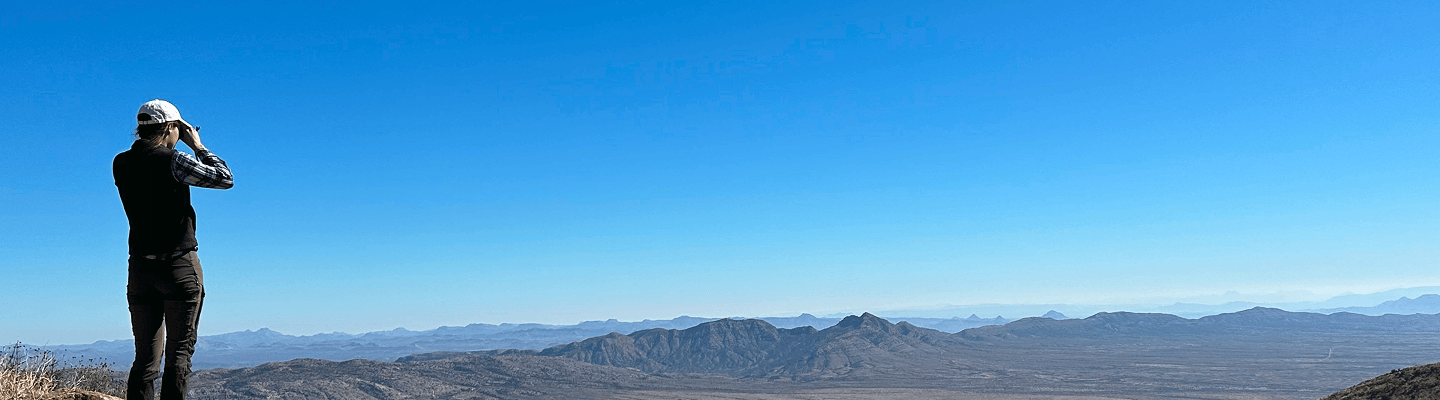
In this study, we test the efficacy of using passive acoustics to estimate densities, comparing results with flush surveys. With data from 40 autonomous recording units in the Davis Mountains of West Texas, we use BirdNET detection software to calculate Montezuma Quail densities, comparing results with physical observer flush-counts over corresponding detection radii. We also inspect phenology of vocal activity over wet and dry periods of a seasonal landscape. We expect to find similar estimates in density between acoustic methods and flush-counts and higher vocal activity during wet periods.
This is the first attempt at deploying passive acoustic techniques to estimate populations of a game bird species and could help determine the best strategy to acoustically monitor Galliformes in the future.