Our Work
Field-based research, education, and partnerships advancing wildlife conservation and resilient landscapes across the Borderlands.
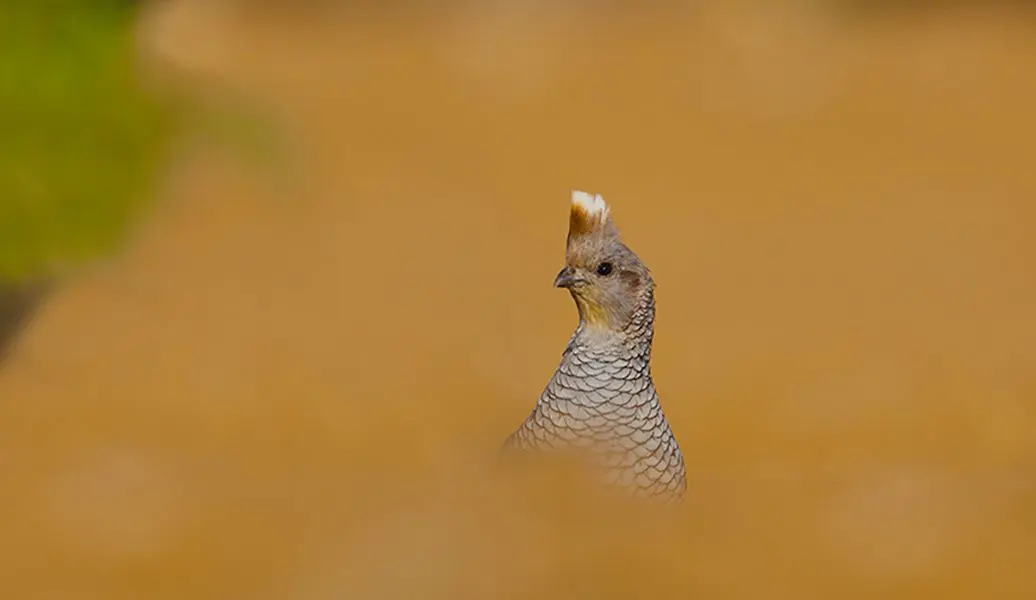
Winter habitat selection, movement and survival of scaled quail in the Trans-Pecos, Texas

Caleb L. Hughes, Carlos E. Gonzalez, Justin T. French, Louis A. Harveson, and Ryan S. Luna
Scaled quail (Callipepla squamata) have experienced population declines in the last several decades due to habitat degradation in the Trans-Pecos region. This crucial problem compounds seasonal impacts on the species’ resources, such as reduced food and cover availability during periodic winter climate events. As these factors can prompt behavioral responses to resultant changes, monitoring spatial behaviors can lend insight into how scaled quail respond.
We hypothesized that scaled quail would use supplemental resources and select for hydrologic features that offer greater availability of food, cover and thermal refuge.
Scaled quail were trapped in southern Brewster County, Texas, during winter 2022–23 using walk-in funnel traps and fit 37 individuals with Global Positioning System (GPS) backpacks to obtain winter location data. Spatial behaviors were modeled with an integrated Step Selection Analysis, using distance to quail feeders, Topographic Position Index (TPI), monthly Modified Soil Adjusted Vegetation Index (MSAVI), slope, and ambient temperature as covariates.
Scaled quail selected for quail feeders and hydrologic features and expressed functional responses to slope and greenness, revealing various selection strengths for low to moderate values of these variables. Scaled quail also exhibited reduced step lengths near feeders. Reduced movement near feeders may illustrate their role in reducing foraging effort and offsetting winter energy deficits.
Scaled quail’s positive relationship to greenness and hydrologic features illustrate the importance of landscape factors that facilitate vegetation carryover into winter, providing microsites that help scaled quail buffer the challenges of Trans-Pecos winters.