Our Work
Field-based research, education, and partnerships advancing wildlife conservation and resilient landscapes across the Borderlands.
Winter Ecology of Black Bears in Big Bend National Park

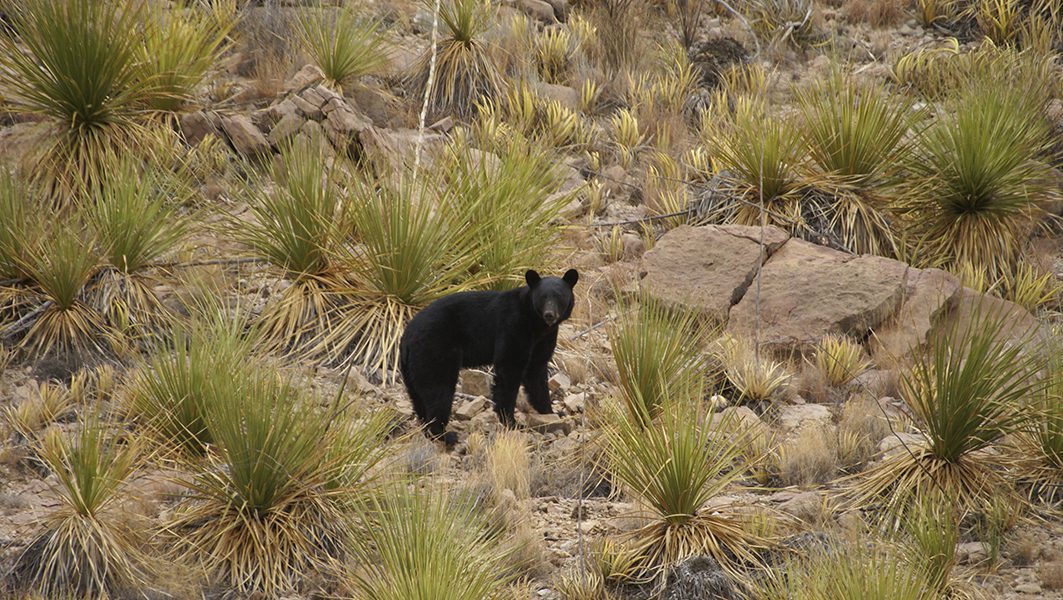
The reestablishment of black bears in Big Bend National Park (BBNP) poses new challenges for natural resource managers, especially in bear-human interactions. Peak visitation at BBNP (December – April) coincides with denning behavior of black bears in this region. Thus, park visitors potentially could disturb denning bears — black bears are known to abandon dens following disturbance.
Knowledge of winter ecology of black bears is important for conservation and management because denning, parturition, and early cub development occur during this period. This knowledge can aid in the development of management strategies that will become increasingly important as the bear population in BBNP continues to increase.
During a five-year period, we monitored 13 radio-collared black bears for 22 den-years in BBNP. Our objectives were to locate and classify dens, record denning chronology, and classify microhabitat surrounding den sites. All six pregnant females, two females with yearlings, seven subadults, and one adult male denned. Three females with yearlings remained active during winter 1998–99. We located four cave dens, five ground dens, and six rock-pile dens. Average dates of den entrance (December 30) and emergence (April 27) for five pregnant females resulted in a mean denning period of 118 days. Pregnant females exited dens later and denned longer than solitary females and males.
Black bears in western Texas used den sites located in higher elevations that were remote and highly defensible. A den-habitat model described less than 56 sq km of suitable denning habitat within and bordering BBNP. Resource managers should reduce visitor and management activities in and around these potential denning areas during winter. The combination of sound human management and bear reproductive success in the Chisos should facilitate the successful return of black bears to BBNP and nearby ranges.