Our Work
Field-based research, education, and partnerships advancing wildlife conservation and resilient landscapes across the Borderlands.
Estimating Nonbreeding Grassland Bird Populations Across Habitats

Alex Chavez-Trevino, Mieke Titulaer, Carlos Gonzalez, Louis A. Harveson, and Maureen Correll (Bird Conservancy of the Rockies)
Grassland-obligate bird species (GOBS) are specialized birds that live in pristine grasslands of North America. Most of these species breed in the Northern Great Plains and spend the winter in the Chihuahuan Desert. Unfortunately, these bird species are declining dramatically. Around 54% of all grassland birds have vanished in the past 50 years. They are considered the fastest declining group of birds in North America. These declines are attributed to many factors, but habitat degradation is one of the main causes of grassland bird decline. The decrease in grass cover and the increase in shrub cover due to anthropogenic activities such as unsustainable grazing, fire suppression, and extraction of burrowing mammals limit the survival of grassland-obligate bird species. Habitat restoration may help mitigate habitat change by restoring grasslands and the birds that rely on them.
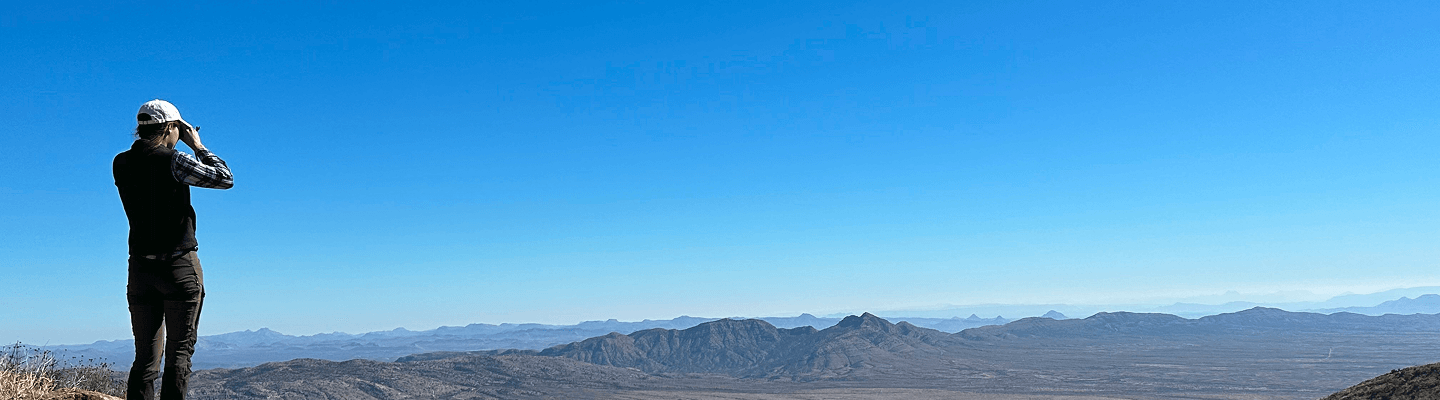
My project evaluates the early effects of a chemical treatment for shrub removal on a private property in West Texas. We used a paired treatment-control design to conduct bird surveys during winters in shrub-invaded areas before and after the treatment, and in control areas containing open pristine grassland. My study sites are located in the Marfa and Marathon grasslands in the Trans-Pecos area of Texas. My objectives are to 1) compare bird populations between the two habitat types, and 2) start a long-term bird monitoring program to evaluate changes in bird populations on restored sites.
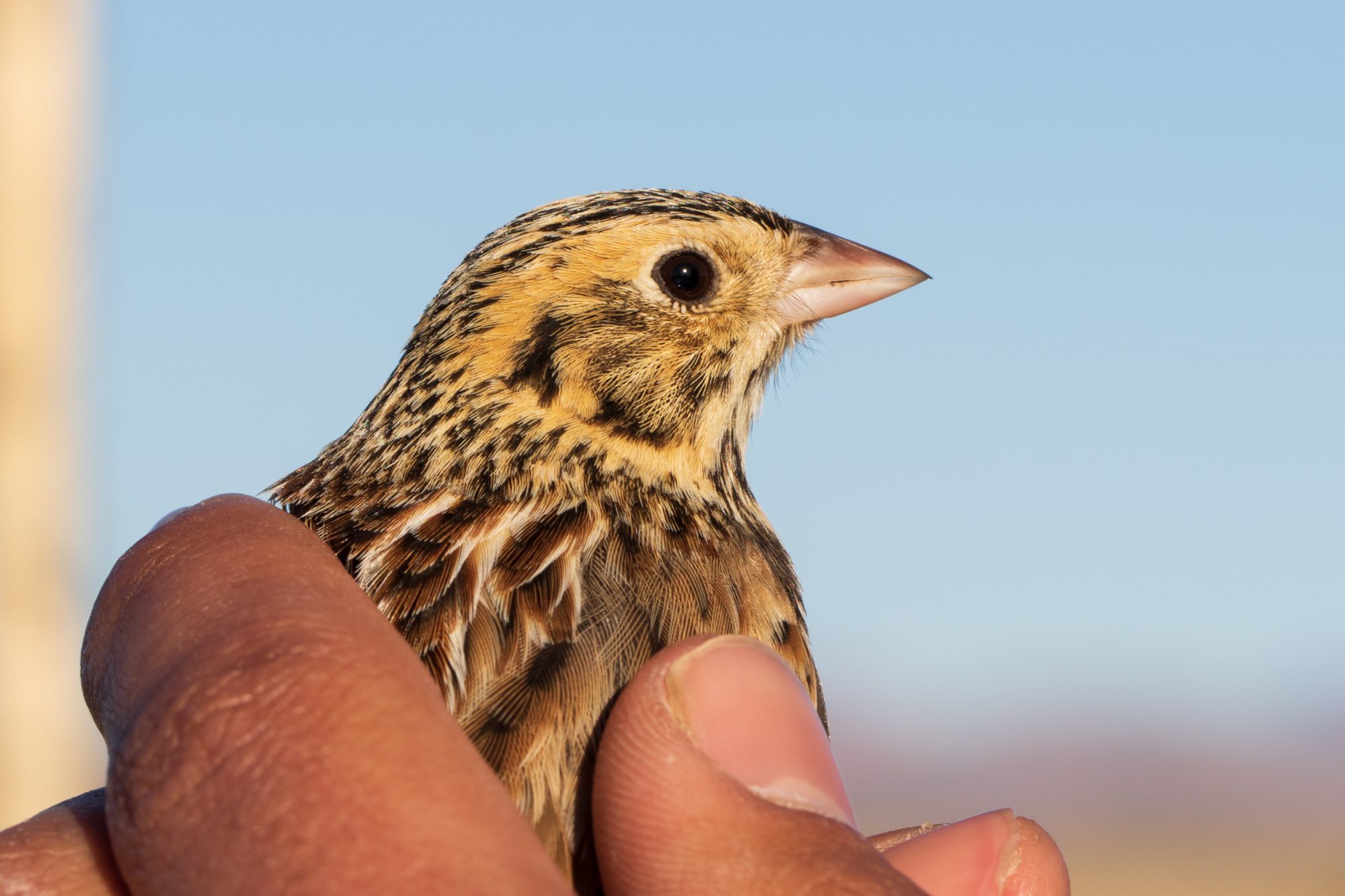
During the winters of 2019 and 2020, we performed at least 54 (875-yard) line transects per site from the first of January to the end of February. We have conducted over 500 line transects, surveyed 240 miles of line transects, and detected over 20,000 birds from 66 different species. Early results show a greater density of grassland obligate sparrows such as Baird’s sparrows, Horned Larks, and Eastern Meadowlarks in the grassland control sites. Interestingly, we found a reduction of about 60% in Black-throated sparrows and 30% in Eastern Meadowlarks in the treated sites after the spray. In the long term, we expect an increase in grassland bird abundance in the restored sites once the treated shrubs are completely removed from the plots.
Funding sources: National Fish and Wildlife Federation and the Borderlands Research Institute.