Our Work
Field-based research, education, and partnerships advancing wildlife conservation and resilient landscapes across the Borderlands.
Impacts of Oil and Gas Development on Scaled Quail Ecology in the Permian Basin, Texas.

Brooke A. Bowman, Ryan S. Luna, Carlos E. Gonzalez, Evan P. Tanner (Caesar Kleberg Wildlife Research Institute), and Jesse Wood (ConocoPhillips Range and Wildlife Ecology)
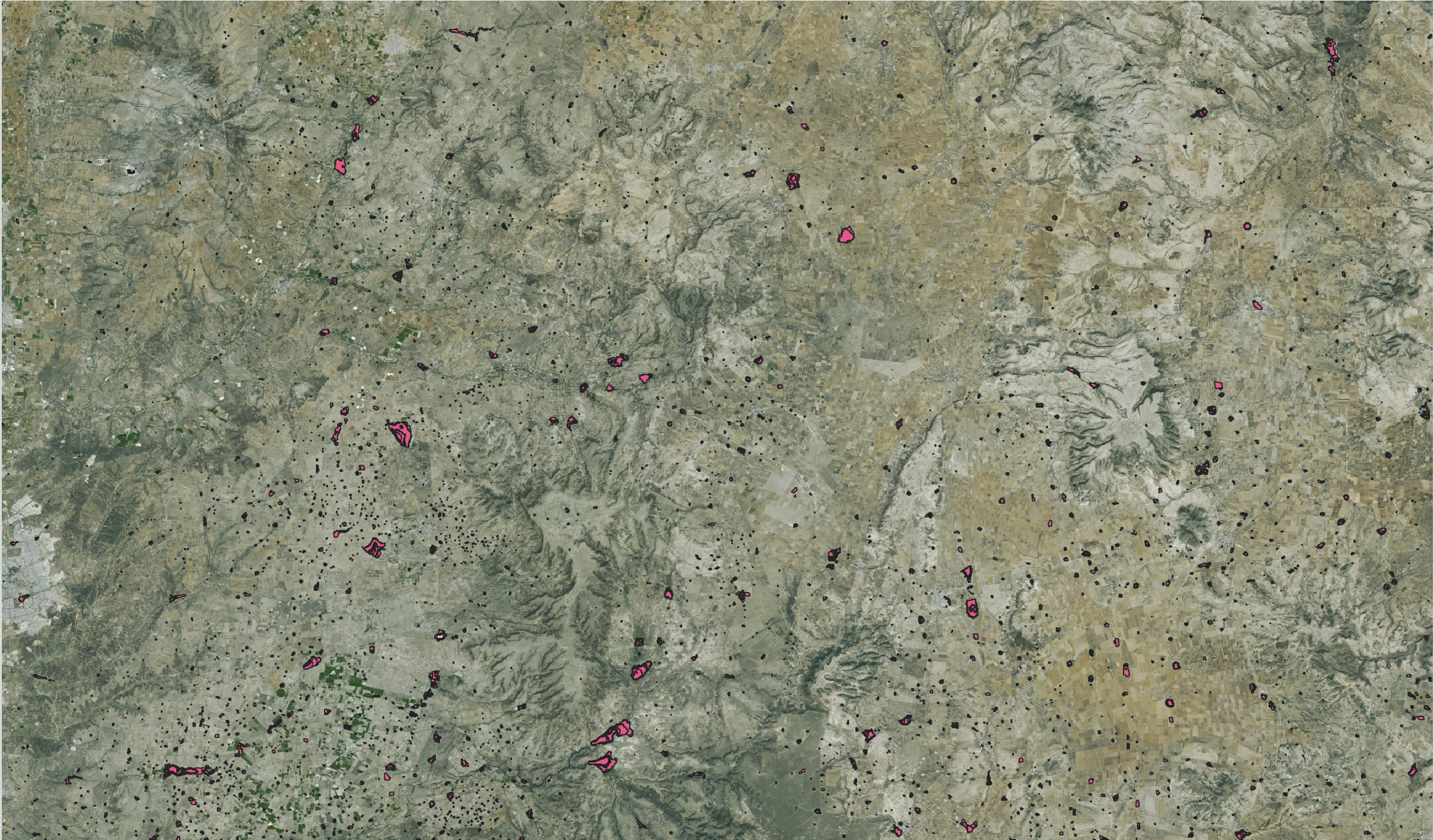
Energy development is expected to increase globally as the human population continues to grow. As with any significant development, energy infrastructure can cause biodiversity loss by introducing habitat fragmentation, direct habitat loss, and other adverse modifications to the landscape. Oil and gas development is currently the most significant contributor to energy development and will likely hold this position for decades. Oil and gas development influences wildlife through various factors across space, species, and ecoregions. Research highlighting how oil and gas development affects declining scaled quail (Callipepla squamata) populations of Texas remains understudied, especially in the Permian Basin region. If scaled quail habitat selection and/or movement behavior is affected by oil and gas infrastructure, the Permian Basin would be the ideal place to identify it.
This study evaluated how anthropogenic influences — such as oil and gas development and supplemental quail feeders — in the Permian Basin of West Texas affected scaled quail habitat selection and movement behavior. Also evaluated were the variation in habitat selection and the movement behavior of scaled quail across seasons.
Two sites were designated: a control site (47 km2 with a well pad density of approximately 0.5 pads/km2) and a developed site (40 km2 with a well pad density of approximately 5 pads/ km2). Using baited walk-in funnel traps, scaled quail were captured across sites during the breeding and non-breeding seasons of 2021–22. Backpack-style global positioning system loggers were deployed on scaled quail, recording locations every 4 hours. An integrated step selection analysis was used to identify which environmental and/or anthropogenic factors affected scaled quail habitat selection and/or movement behavior across well pad densities.
After determining that monthly vegetation greenness, distance to well pads, distance to supplemental feeders, and various movement variables significantly affect scaled quail habitat selection and movement behavior, principal component analyses were used to discern whether differences in selection and behavior occurred across well pad densities and seasons.
While scaled quail did not select habitat or move differently across well pad densities or seasons, their niche expanded considerably during the winter months of the non-breeding, covey season. This suggests that scaled quail reduced intraspecific competition as resources decreased through expanding their niche breadth. Diel activity patterns in habitat selection and movement were also identified.
This research raises the question: Are oil and gas fields in the Permian Basin past the tipping point of well densities that would allow wildlife managers to pick up a meaningful signal in scaled quail habitat selection and movement behavior? With a treatment area 10 times more impacted than the control area showing no difference in scaled quail selection strategies or movement, it is hard to discern whether any management strategies will make a meaningful impact past 0.5 pads/km2. As energy needs expand across the United States in the upcoming years, studies such as this will continue to be important for wildlife conservation in these shared spaces.
Funding source: ConocoPhillips.