About Us
Advancing conservation science through research, education, and partnerships across the Borderlands.

Graduate Assistant
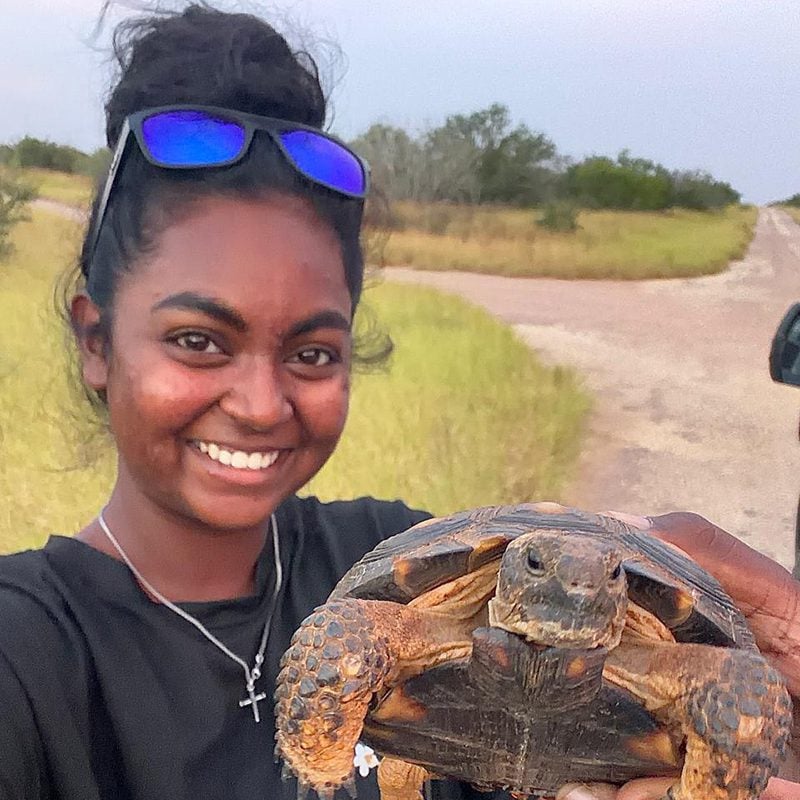
Shefin Hibba Singh
MS Student
Project: Population Status and Habitat Assessment of Southwestern Willow Flycatcher and Western Yellow-billed Cuckoo in the Trans-Pecos Region of Texas
Advisor: Drs. Antonio Cantu de Leija, Alejandro Chavez Trevino, Maureen Frank
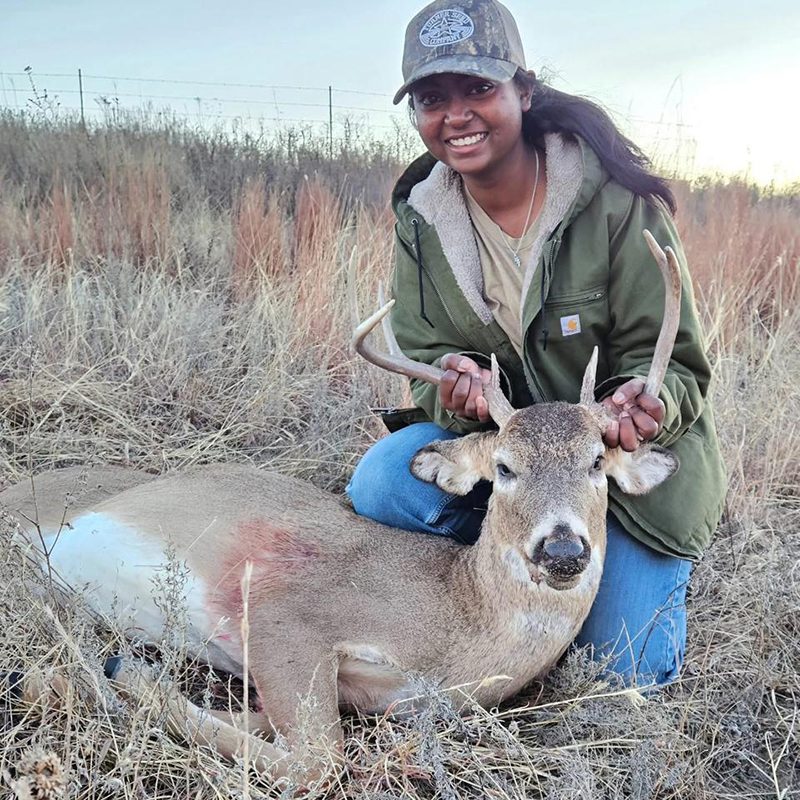
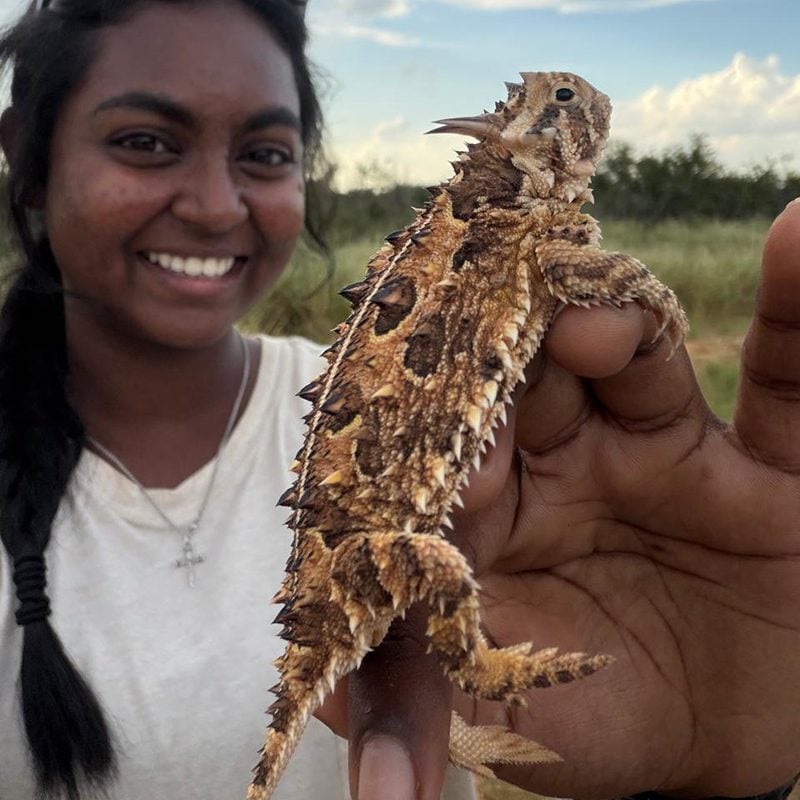
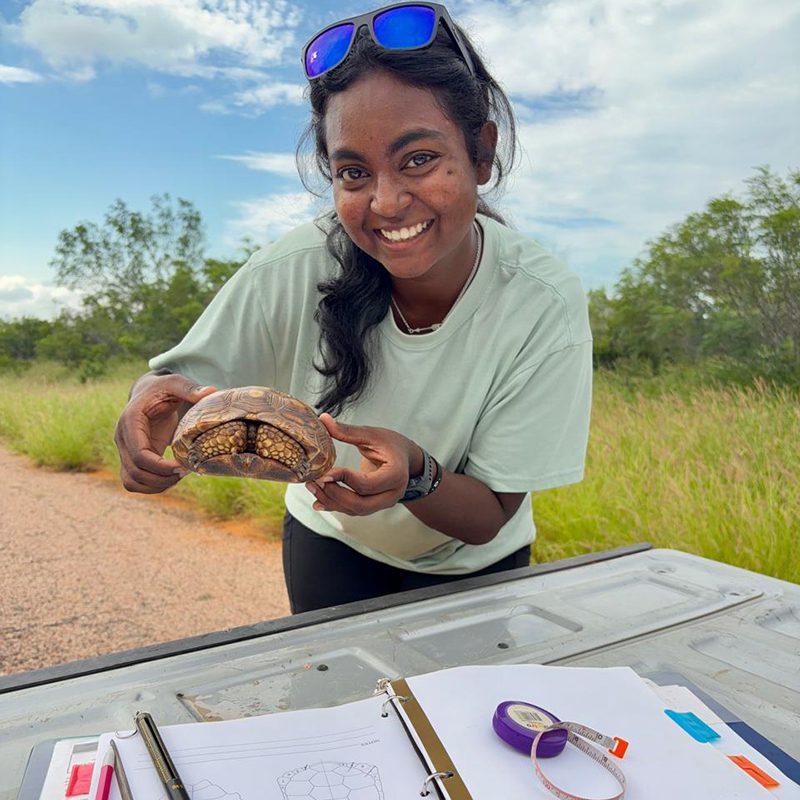
Growing up, Shefin was always curious about wildlife, with some of her earliest experiences coming from family trips to South India. She decided to major in Wildlife Biology to explore that interest further, which led her to volunteer on research projects and eventually complete her first internship with Texas Parks and Wildlife Department at the Gene Howe Wildlife Management Area. There, she realized she wanted to pursue wildlife management and conservation. She later worked at the Matador WMA, Rolling Plains Quail Research Ranch, and Chaparral WMA, gaining hands-on experience banding songbirds at MAPS stations, working with quail, collecting vegetation data, and conducting pronghorn surveys. Working across different regions of Texas also taught her how the five tools of wildlife management are practiced in different ways across the state. Now in Alpine, Shefin is excited to learn about the Trans-Pecos Region, take on her own research project, and use her findings to inform wildlife management.
The Southwestern Willow Flycatcher and Western Yellow-billed Cuckoo both depend on dense riparian habitats that have declined sharply across the Southwest. In the Trans-Pecos Region, these federally listed species have never been systematically surveyed. Most of what is known comes from scattered eBird records and habitat models, leaving basic questions about distribution, occupancy, and habitat use unanswered. Shefin’s research will help fill that gap by surveying riparian areas throughout the region and quantifying the site-level and landscape-scale habitat features most closely associated with species presence, including vegetation composition and patch connectivity. By pairing these habitat measurements with detection data from acoustic monitoring, this project will help identify which riparian conditions in Texas actually support these species. This information can guide habitat restoration priorities, private-landowner stewardship efforts, and long-term conservation planning across a region where suitable habitat is largely privately held and poorly understood.