Dr. Maureen Frank Honored as 2026 Educator of the Year by Texas Chapter of The Wildlife Society
Key Points:
- Dr. Maureen Frank named 2026 Educator of the Year by the Texas Chapter of The Wildlife Society, recognizing excellence in conservation education and student mentorship.
- Student-nominated award highlights Dr. Frank’s impact at Sul Ross State University, where she teaches conservation biology and emphasizes real-world, hands-on learning.
- Dr. Frank’s teaching approach integrates science, communication, and human dimensions, preparing students to tackle complex natural resource management challenges.
By: Cindi Meche, eMBA
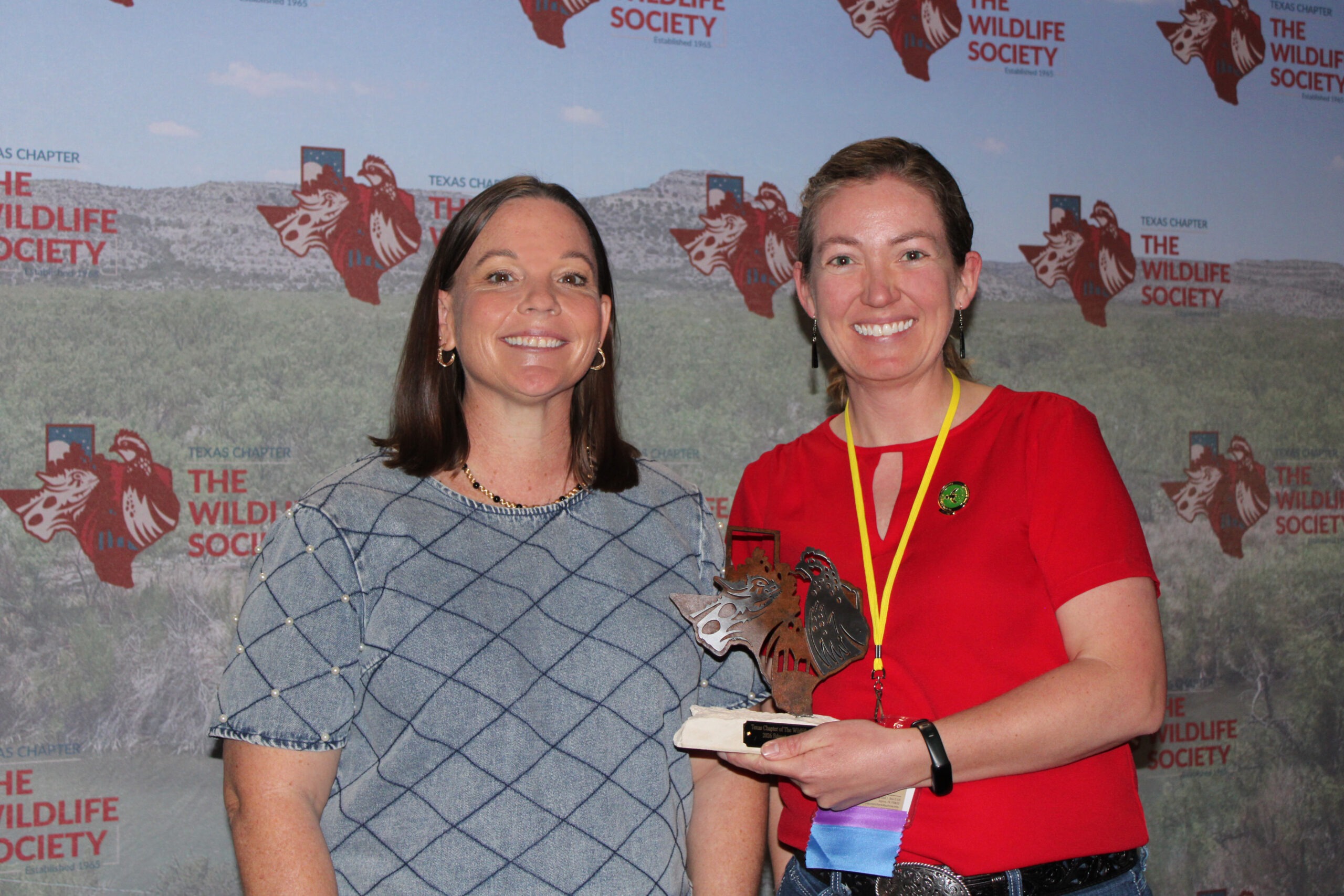
Dr. Maureen Frank, James A. “Buddy” Davidson Charitable Foundation Endowed Professor and Associate Professor of Conservation Biology at the Borderlands Research Institute, has been named the 2026 Educator of the Year by The Texas Chapter of The Wildlife Society. This recognition not only highlights her excellence in teaching, but also the meaningful connections she fosters with her students.
For Frank, the award carries both professional and personal significance. “A lot of people that I really admire have received this award,” she shared during a recent interview. “It’s something I’ve aspired to.” What makes the honor especially meaningful to her is that it comes from nominations made by her students. To Frank, that recognition reflects something deeper than classroom success. “It means I was able to connect with my students,” she said.
Making a connection with her students is at the heart of her teaching philosophy at Sul Ross State University. In a field as multi-faceted as Natural Resource Management, Frank emphasizes the importance of seeing the full picture. Ecology, she explains, is not just about wildlife or landscapes; it is equally about human interactions, communication skills, and good decision-making. “You can’t look at just one element because it all ties together,” she noted.
This holistic perspective shapes how she designs her courses. Frank prioritizes hands-on learning and real-world application, ensuring students don’t simply absorb information but understand how to apply it. In one example she gave, she worked with a colleague to rework an agricultural statistics course to make it more practical and engaging. By the end of the semester, students could better explain how they would apply the concepts in their careers.
“I want students to leave with a breadth of skills they can apply to any situation, and be able to think critically,” Frank said. That includes not only technical knowledge, but also critical thinking, communication, and adaptability. She encourages students to ask better questions, recognize the limits of their knowledge, and collaborate with others.
Frank’s approach reflects the changing landscape of conservation biology. Rather than relying solely on textbooks, she incorporates current scientific literature and case studies, allowing students to engage with emerging issues and “wicked problems,” or complex problems without clear-cut solutions. From private land management to human-wildlife interactions, her classes challenge students to think beyond textbook scenarios and consider multiple perspectives.
Equally important is her emphasis on communication. Whether writing clearly, presenting ideas effectively, or understanding diverse viewpoints, Frank believes these skills are critical for success in Natural Resource Management. “The way we present information matters,” she explained, noting that strong communication helps bridge gaps between scientists, landowners, policymakers, and the public.
Ultimately, Frank hopes her students leave her classroom not only with knowledge, but with a sense of curiosity. “The foundation of science is acknowledging what you don’t know and realizing that our knowledge continues to expand,” she said. By embracing curiosity, collaboration, and critical thinking, her students are better prepared to navigate the complexities of conservation and make educated decisions in their future careers.
The Educator of the Year award recognizes these efforts, placing Frank among a group of respected professionals who have shaped the field of teaching through mentorship. For her, it is both an honor and a reminder of the impact she has had on her students. Through her dedication to her students, Dr. Frank continues to inspire the next generation of conservation leaders.