
West Texas Wildlife Monitoring Effort: Five Days on the Front Line of Big Game Conservation
Written By: Cindi Meche, eMBA
Walking down into the dry creek bed deep inside Black Gap Wildlife Management Area (WMA), there was a sense that something big was about to happen. The whir of helicopters lifting off and the rush of people arranging equipment created a palpable tension as teams prepared for the first big game capture of the day.
The goal was to capture 132 animals, but the team ended up with a few bonus captures: 35 desert bighorn sheep, 60 mule deer, and 41 aoudad over five days at two locations—Elephant Mountain WMA and Black Gap WMA. These species inhabit the rugged Chihuahuan Desert, and monitoring them is essential to understanding their health and long-term survival.
When the helicopters returned, they brought two to three large animals at one time, each secured in a purpose-built carry bag and gently lowered to the ground. Teams of four researchers rushed forward to lift the animals onto examination tables. Each animal was blindfolded and had its legs safely secured to prevent injury to itself or staff.
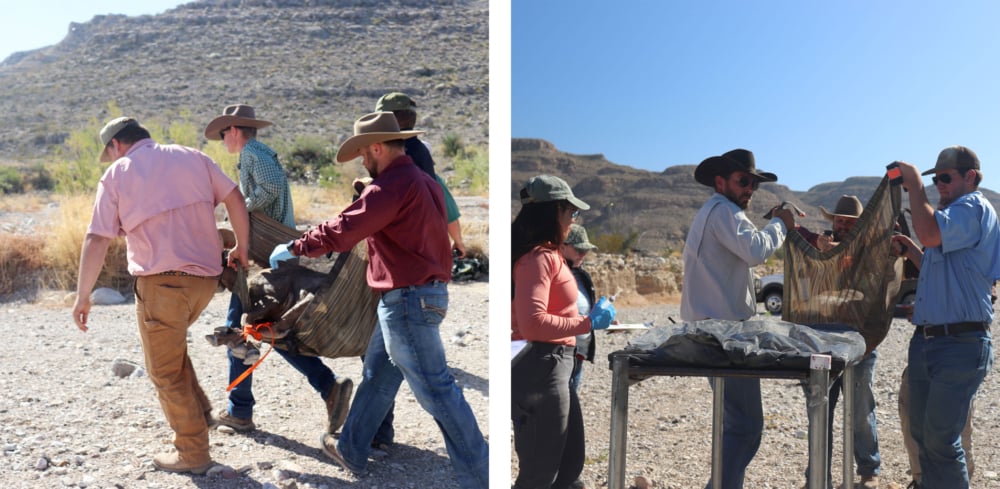
(photos by Cindi Meche)
Great care was taken to manage stress, monitoring body temperature and cooling the animals as needed. Blood and stool samples were taken, as well as ticks. They were each checked for any wounds that needed tending to. Finally, new GPS collars and ear tags were attached to support ongoing monitoring.
“Part of this project is to monitor the health of the bighorn heard within Black Gap, as well as the mule deer,” explained Dr. Justin French, Big Game Specialist and Assistant Professor of Natural Resource Management at Borderlands Research Institute “We keep an eye on them as their population recovers from a recent Mycoplasma ovipneumoniae (M. ovi.) outbreak and make sure they remain healthy into the future.”
This project is a collaborative effort involving Wildlife Division staff from Texas Parks and Wildlife Department; students from Texas Tech’s Department of Natural Resources Management; members of Texas Parks and Wildlife Foundation’s Stewards of the Wild; and faculty, staff, and students from the Borderlands Research Institute. Coordination across these teams is essential to making a project of this scale successful.
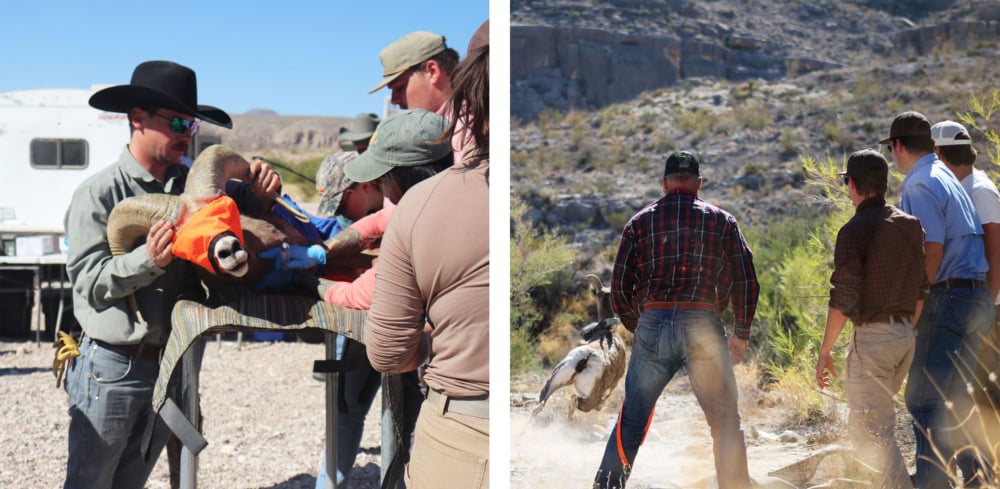
(photos by Cindi Meche)
The animals, after only a few minutes of handling, were carried from the tables and gently placed on the ground. The blindfolds and leg bindings were removed, and then they were set free to roam the West Texas landscape that is their home. Wildlife researchers will now be able to track their movements for a variety of research studies.
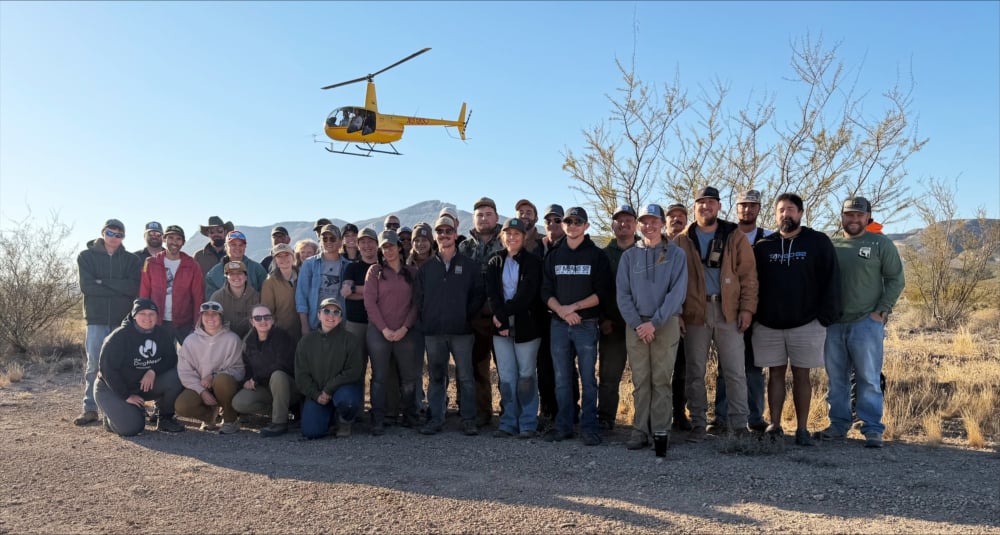
(photo by Halli Lovell)