On the Road and On the Range: Ty Goodwin’s Journey West
Key Points:
- Early experiences, including a childhood journey to West Texas and involvement in 4-H plant identification, sparked Ty Goodwin’s lifelong passion for rangelands and land stewardship.
- Ty Goodwin’s academic and research path at Sul Ross State University and beyond focuses on practical rangeland solutions, including grazing systems, vegetation dynamics and sustainable land management.
Written by: Lydia Saldaña
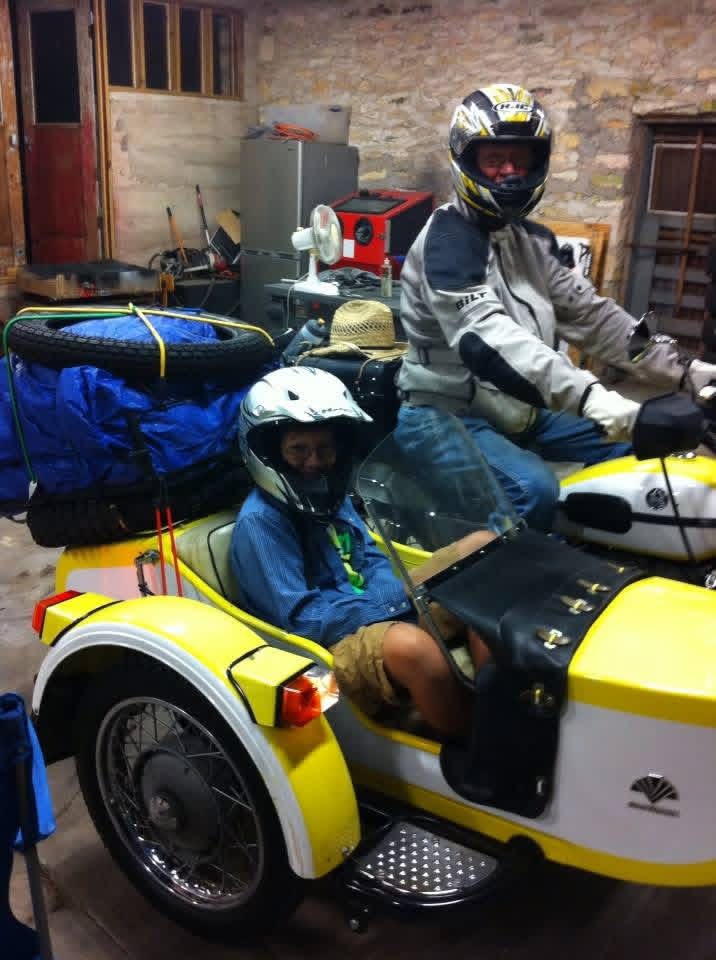
At 12 years old, Ty Goodwin climbed into the sidecar of a banana-yellow motorcycle and headed west.
The bike—a restored Russian Ural his grandfather had rebuilt by hand—topped out at 55 miles per hour. What should have been a six-hour drive from Gatesville to Alpine stretched into 14. But that was the point.
“You smell a lot of roses going that slow,” Ty said.
Somewhere along that long, dusty ride into the Big Bend region, something clicked.
“It was the first time I felt that kind of freedom, seeing a part of the country that was just so rugged,” he said. “I kind of fell in love with the desert.”
He’s been coming back ever since.
Not long after that trip, Ty found himself pulled into something else another direction that would shape his future: plant identification.
It started simply enough. A friend invited him to join a 4-H plant ID team. Weekly practices turned into competitions, and competitions turned into a deeper passion.
“We just learned how to open our eyes and see the plants around us, to kind of decode all the green,” he said.
What began as a way to hang out with friends became a way of understanding the land—and eventually, how to manage it.
By the time he graduated from high school in 2020, Ty had spent nearly a decade building that knowledge. When it came time to choose a college, the decision felt natural. He headed west again, enrolling at Sul Ross State University and returning to the same landscape that had first captured his imagination.
At Sul Ross, he studied natural resource management with an emphasis in range and wildlife management, quickly immersing himself in both coursework and fieldwork. As an undergraduate, he participated in the Borderlands Undergraduate Mentorship Program and worked as a field technician with the Borderlands Research Institute, helping graduate students conduct vegetation surveys, analyze data and apply real-world management practices.
He graduated with his bachelor’s degree in 2023, then stayed on to pursue a master’s degree, leading a grazing-focused research project examining how different systems affect forage production, plant diversity and soil moisture in semi-arid grasslands. Now, as part of a joint doctoral program between Sul Ross and Texas A&M–Kingsville, he is continuing that work, focusing on rangeland management in South Texas and exploring how livestock production influences vegetation communities over time.
At its core, the work is about solving problems.
“I’m a mechanic at heart,” Ty said. “I like fixing things. And in research, you’re trying to figure out problems and how to fix them.”
Somewhere along the way, Ty became the teacher.
After arriving at Sul Ross, he realized the plant ID program that had meant so much to him didn’t have much of a presence. So, he helped re-establish the program, coaching students, leading practices and helping the next generation learn to see the land the way he once did.
“I really love teaching those students,” he said. “I get inspired when people are learning things.”
That sense of mentorship, passed down by coaches, professors and even his grandfather, now runs through everything he does.
Ty’s story is also one of connection—to land, to people and to the unexpected turns that shape a life.
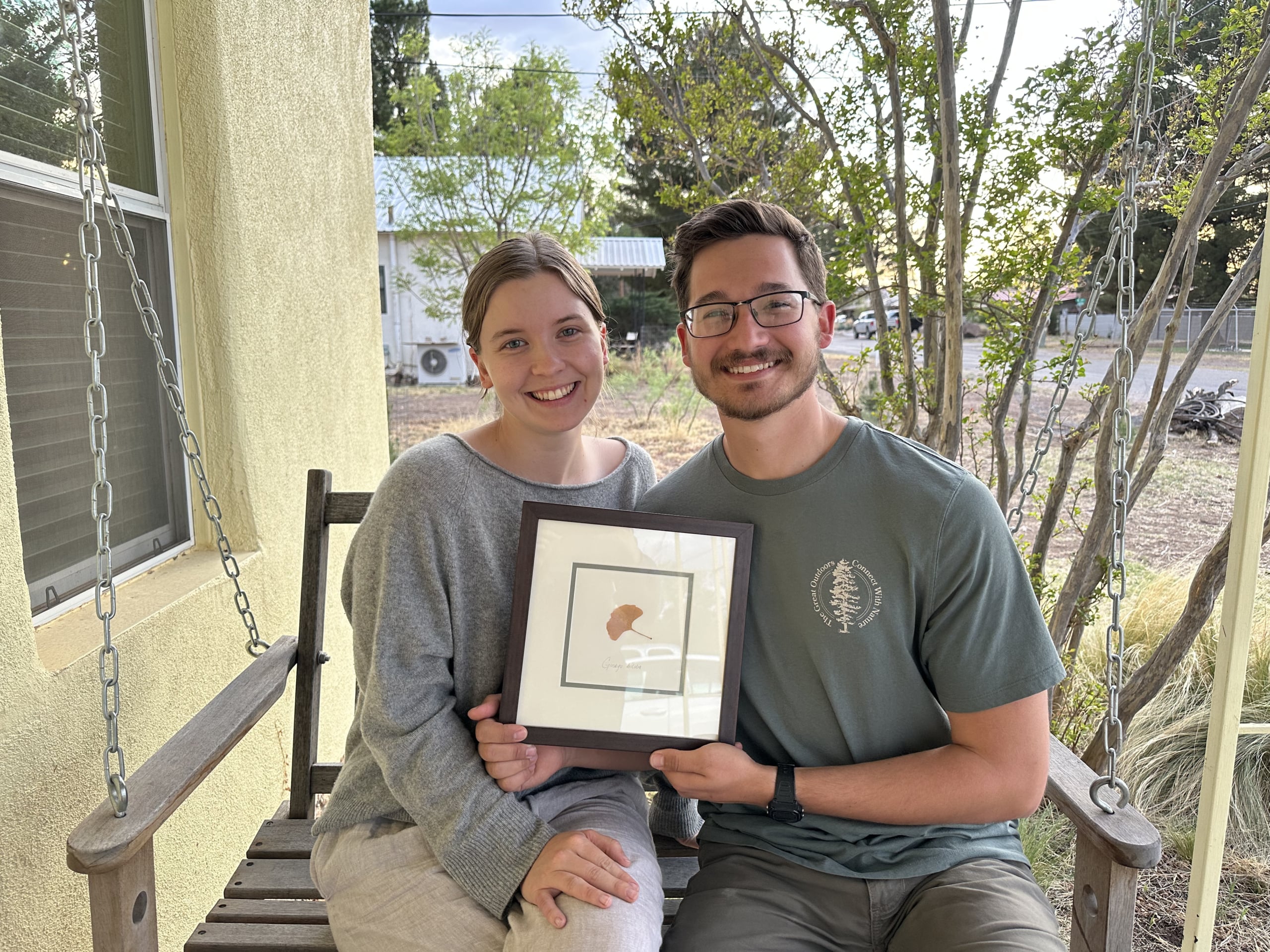
He met his wife, Eliana, in a wildland plants class at Sul Ross. Their relationship, fittingly, started to bud next to a ginkgo tree on campus. Today, a framed leaf from that tree hangs in their home, a quiet reminder of where it all began.
He still spends as much time as he can outdoors, camping, exploring the Big Bend region and sharing meals with friends and family. And his grandfather—the one who first took him west—still shows up from time to time, drawn by the same landscape that changed everything for his grandson.
For someone so deeply rooted in his work, Ty is refreshingly open about the future.
“I still don’t know what I want to be when I grow up,” he said.
But that uncertainty isn’t hesitation, it’s possibility. Whether he stays in academia, continues research or finds another path entirely, the throughline is clear: a deep respect for the land, a drive to understand it and a desire to help others do the same.
And it all started with a slow ride west.