Personal Profile
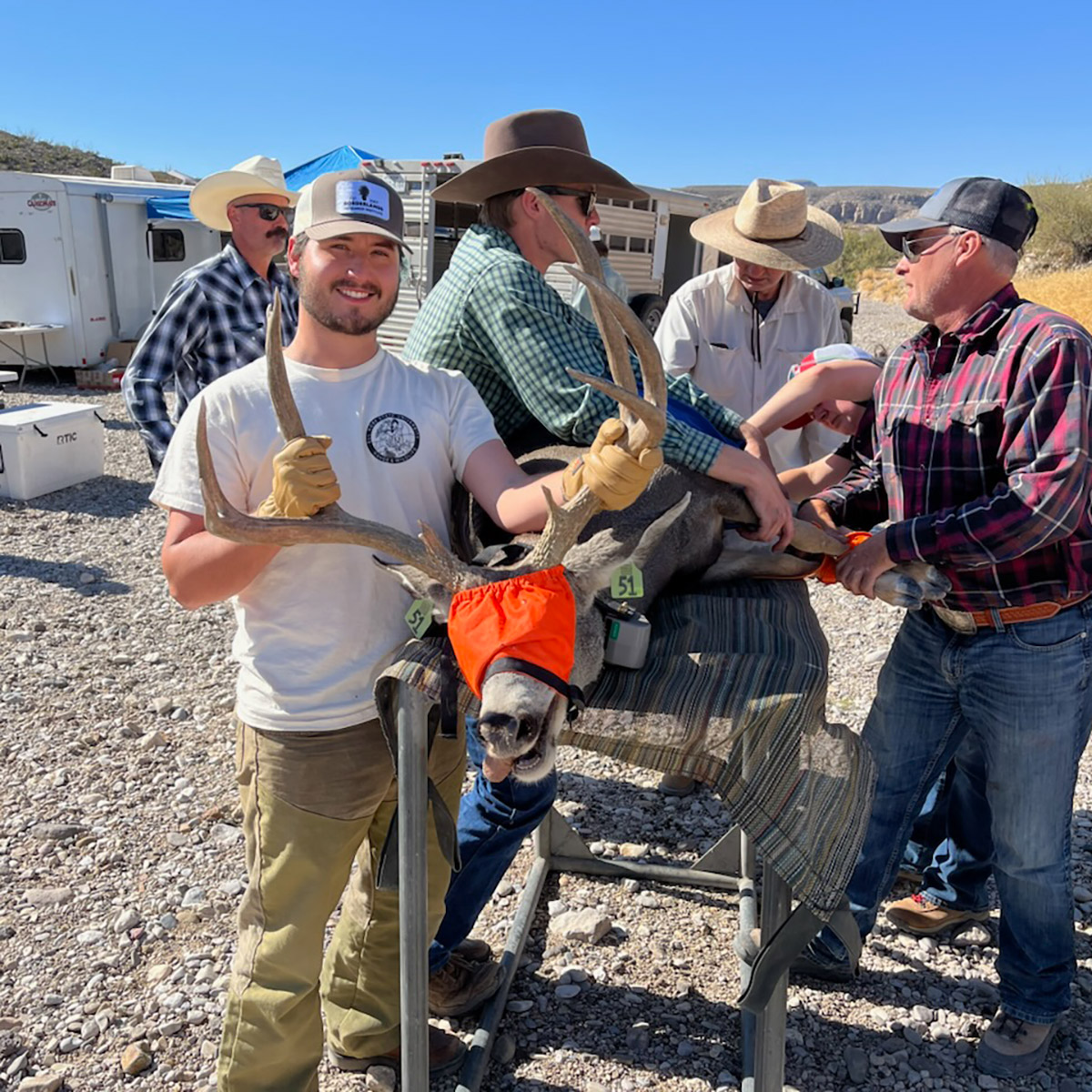
Christian was born in Denver, Colorado, but was raised in Houston, Texas from a young age. His frequent camping, fishing, or hunting trips with his father were always welcome escapes from the towering concrete and bright city lights of Houston. Many of those trips explored the numerous eco-regions of Texas, but the rugged and remote west has always been his favorite. Determined to merge his love for the outdoors with his interest in natural sciences, Christian pursued an Environmental Science degree with a focus in Sustainability from Sam Houston State University in Huntsville, Texas. While there, he worked as an undergraduate research assistant for the university’s Freshwater Streams and Rivers lab, studying Ecosystem Metabolism and Carbon Cycling in aquatic systems. Since graduating in 2023, he has been working as a technician at Baylor College of Medicine studying early-stage development of breast cancer and is now pursuing a MSc in Range and Wildlife Management at Sul Ross. In his free time, he enjoys camping, hunting, fishing, cooking, and playing acoustic guitar.
Project Summary
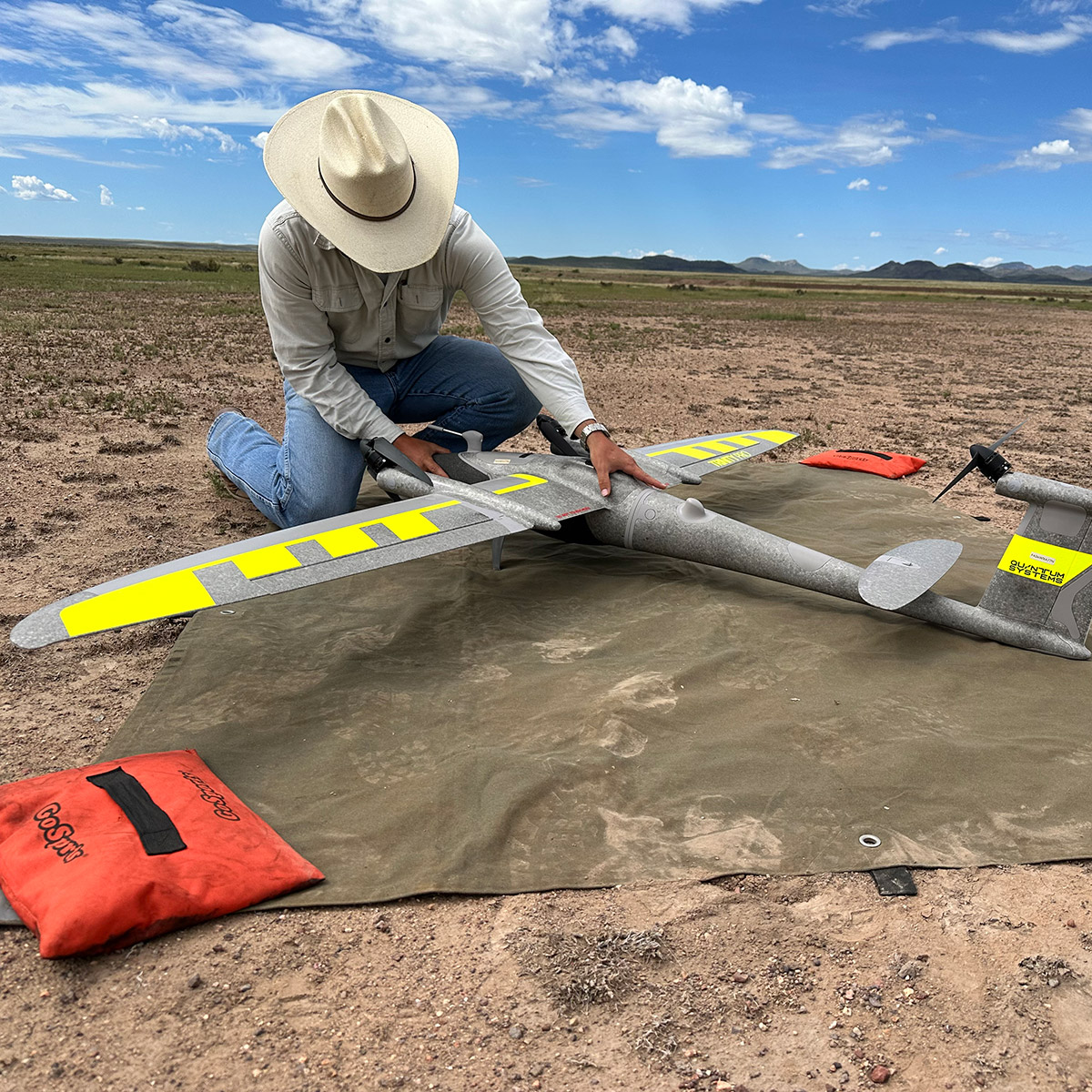
Rangelands comprise roughly 30% of the land area in the continental United States and contribute significantly to ecosystem services such as wildlife habitat, water purification, carbon sequestration and food provisions. Historically, habitat fragmentation, climate change, and unsustainable management practices have diminished rangelands’ capacity to withstand disturbance, support life, and provide ecosystem services. One important thing to consider when assessing ecosystem function in rangeland is the spatial configuration of plant communities. How plants respond spatially to disturbance can influence ecosystem functions like water retention and nutrient cycling, as well as mechanical processes such as soil erosion. However, our ability to investigate is often limited by a lack of efficient, precise and reproducible sampling methods. Remote sensing in ecology is proving to be useful for increasing the efficiency of sampling, increasing the area of sample coverage, all while bolstering reproducibility of both sampling and analysis. Furthermore, remote sensing using drones dramatically increases the resolution of imagery compared to satellite remote sensing. Instead of pixel size representing the area of a house, drones can collect imagery with the pixel resolution roughly the size of a golf ball. This means that drone imagery very closely represents what is happening on the ground and that image analysis can be performed on a much finer scale. Christian’s project will implement the use of drone technology to collect high resolution remotely sensed data and compare the spatial structure of vegetation in pastures following rotational and continuous grazing.