
Desert Lifelines
Written by: Jared Schniers
The Chihuahuan Desert is one of the most diverse arid regions in the world. Our desert usually endures cold winters and receives most of its precipitation during monsoon thunderstorms. These rain events are highly variable across years and across the landscape, so annual precipitation can range from 6 to 20 inches throughout the region.
When it does rain, the water usually falls hard and fast, often causing rapid runoff. This runoff eventually reaches our seasonal or “intermittent” creeks. These tend to flow for only a portion of the year, yet they sustain riparian areas that are a lifeline to our landscapes. A riparian area is the transition between a stream and the uplands. Although they comprise just 1-2% of the total land area in desert regions, their value far exceeds their size.
Sometimes referred to as “ribbons of gold,” riparian areas are special places in our landscapes and provide many underappreciated benefits. Riparian areas allow flood waters to spread horizontally across the creek. This reduces the force, depth, and speed of the water and recharges the shallow riparian aquifer, allowing larger trees and other vegetation not found in the uplands to thrive. In turn, riparian vegetation helps to dissipate the energy of flowing water, hold streambanks in place, and prevent excessive soil loss.
Deciduous riparian woodlands include species such as cottonwood, ash, willow, walnut, and hackberry. These plant species provide essential habitat for the animals of the Trans-Pecos, such as desert mule deer, elk, javelina, rabbits, quail, raptors, and a variety of songbirds. An estimated 80% of vertebrate species in the Chihuahuan Desert depend on riparian areas for at least a part of their life cycle. Protecting these special environments in turn helps all of these species of wildlife.
We often use the term “watershed,” but it conveys the wrong message, because an area that repels or “sheds” water is not the goal. Deep creek channels and gullies are the result of past erosion and are indicative of an unhealthy stream. They concentrate the force of the water and allow it to rapidly leave the system. Instead, healthy landscapes slow the runoff and allow infiltration, retaining and storing water for a slow, prolonged release.
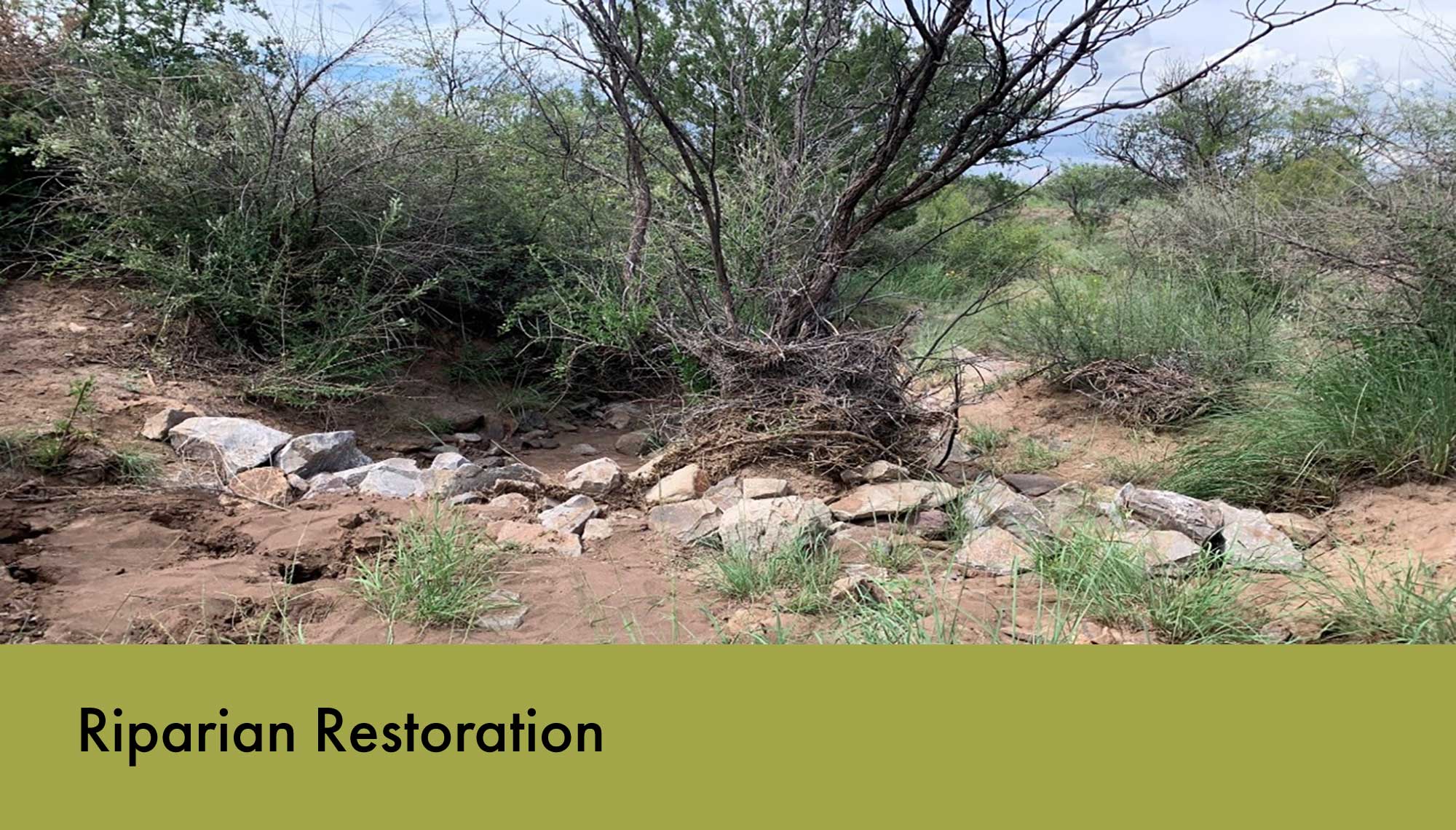
Conservation efforts to reduce erosion and rebuild incised stream channels include low-tech process-based restoration practices. These practices are simple structural additions to mimic natural functions and initiate geomorphic and hydrologic processes. These practices are not intended to stop the water completely, but to slow it down and allow suspended soil and debris to be deposited. These soil deposits should enable vegetation to become established and eventually mitigate the effects of gully erosion. Many of our West Texas streams are degraded, channelized, and disconnected from the floodplains. These low-tech process-based restoration techniques can be effective in rebuilding stream bottoms and rehydrating the floodplains, which can allow recharge to the riparian aquifers. Through collaborative conservation efforts, we can improve the hydrologic function of our West Texas streams.
To learn more: https://bri.sulross.edu/land-stewardship/stewardship-acci/
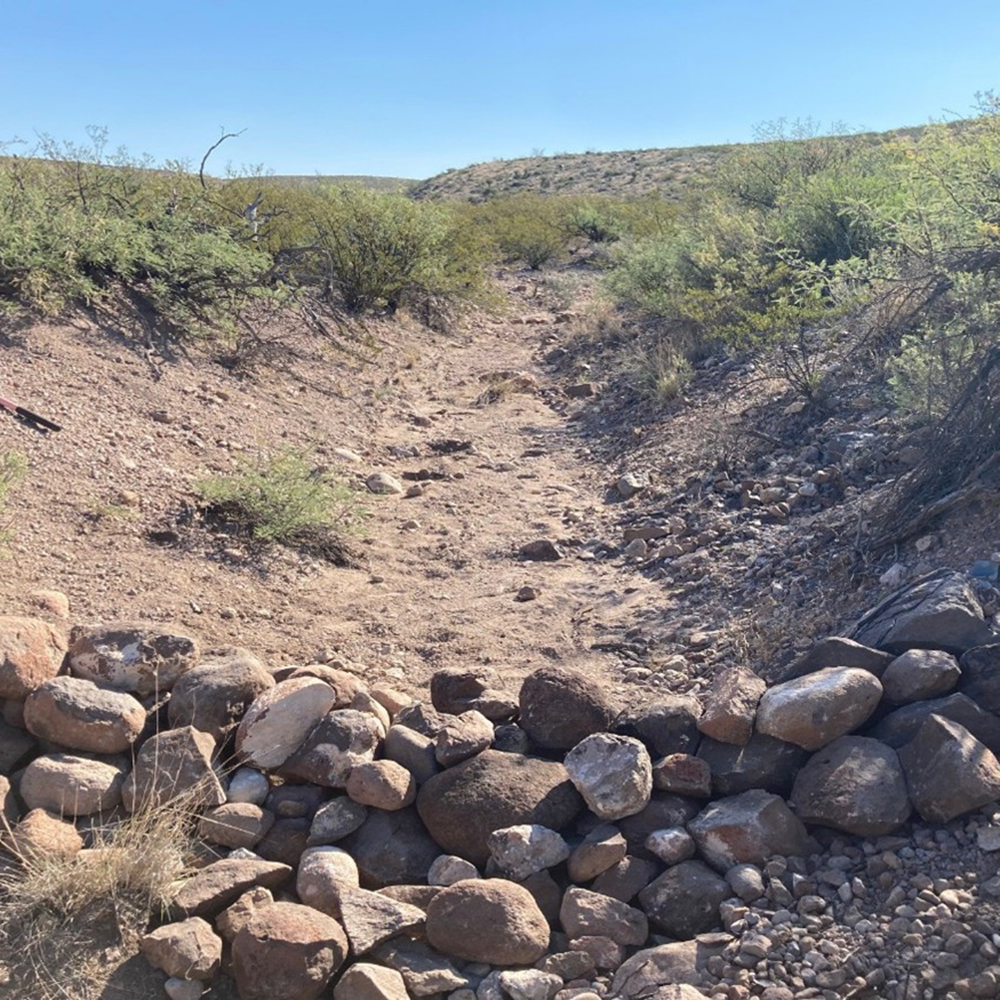
(Presidio County)
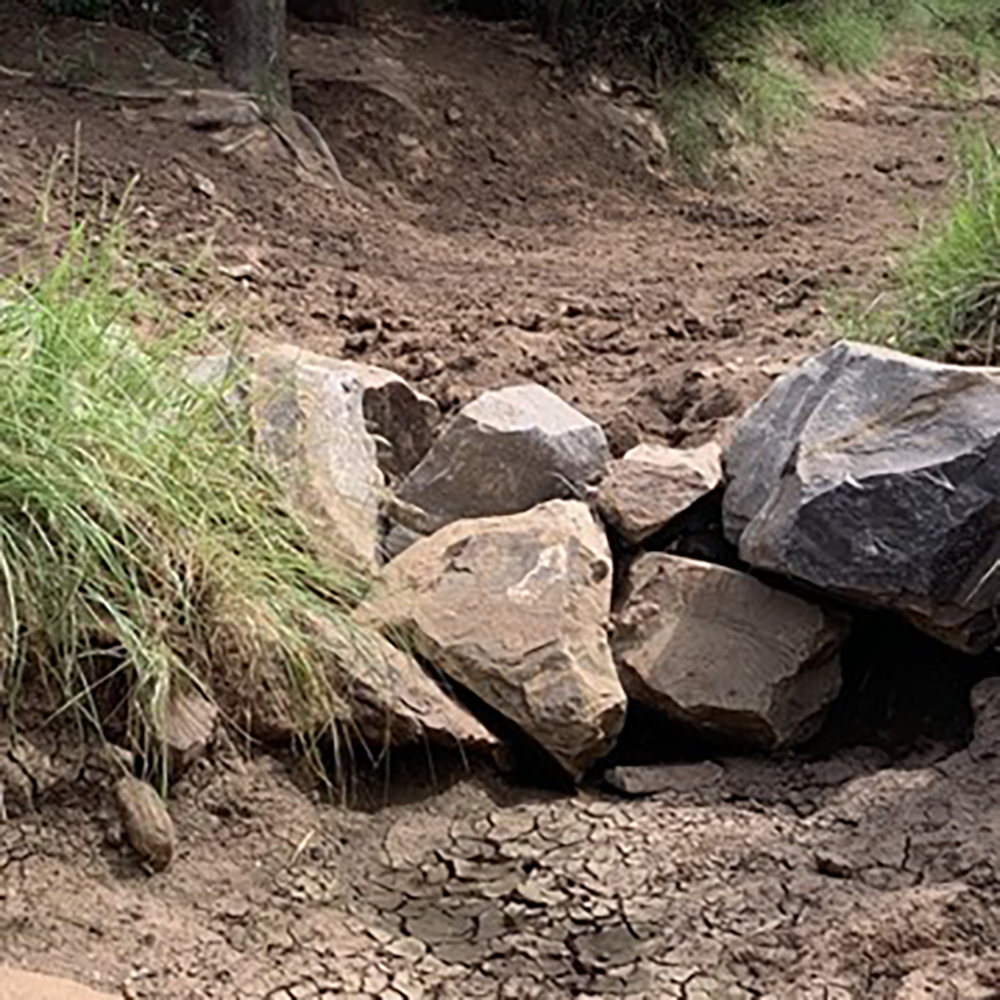
(Brewster County)
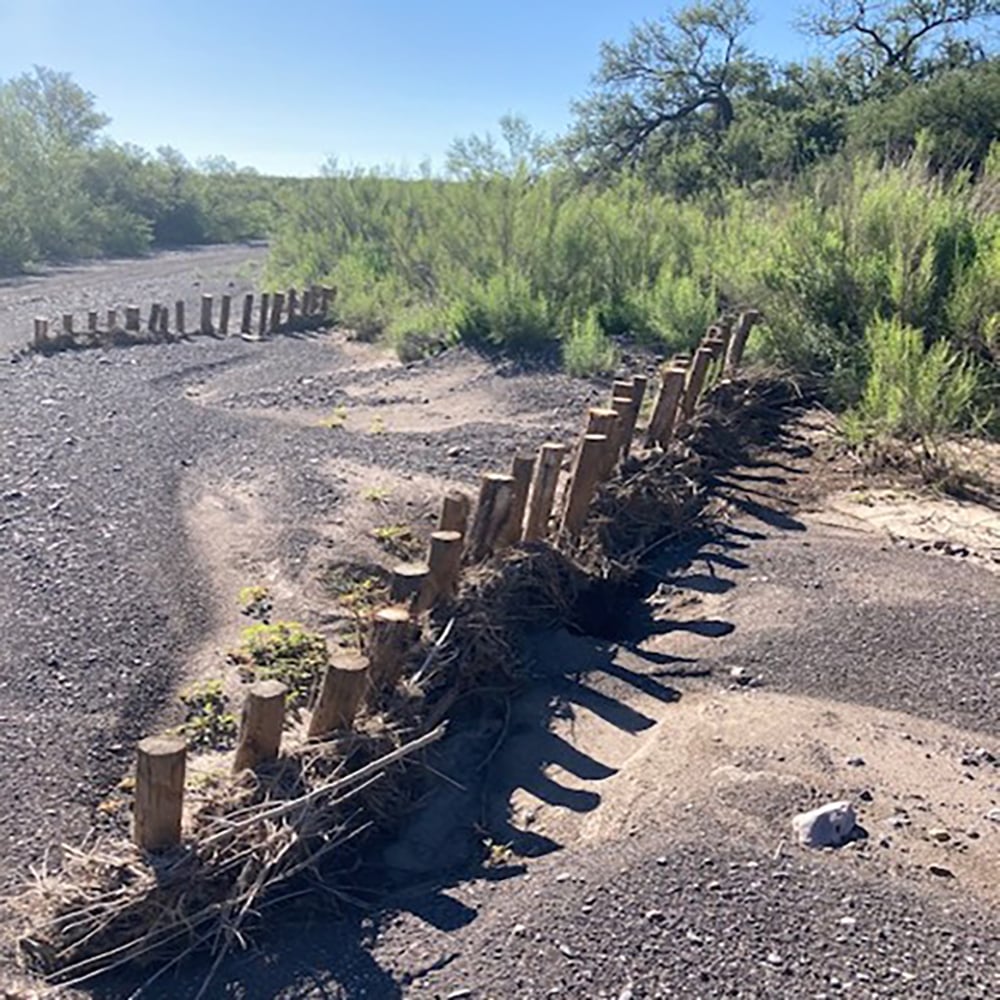
(Presidio County)