Non-Game Management and Research
Trans-Pecos Wildlife Conference 2026
Aug. 6, 1:30 pm Session
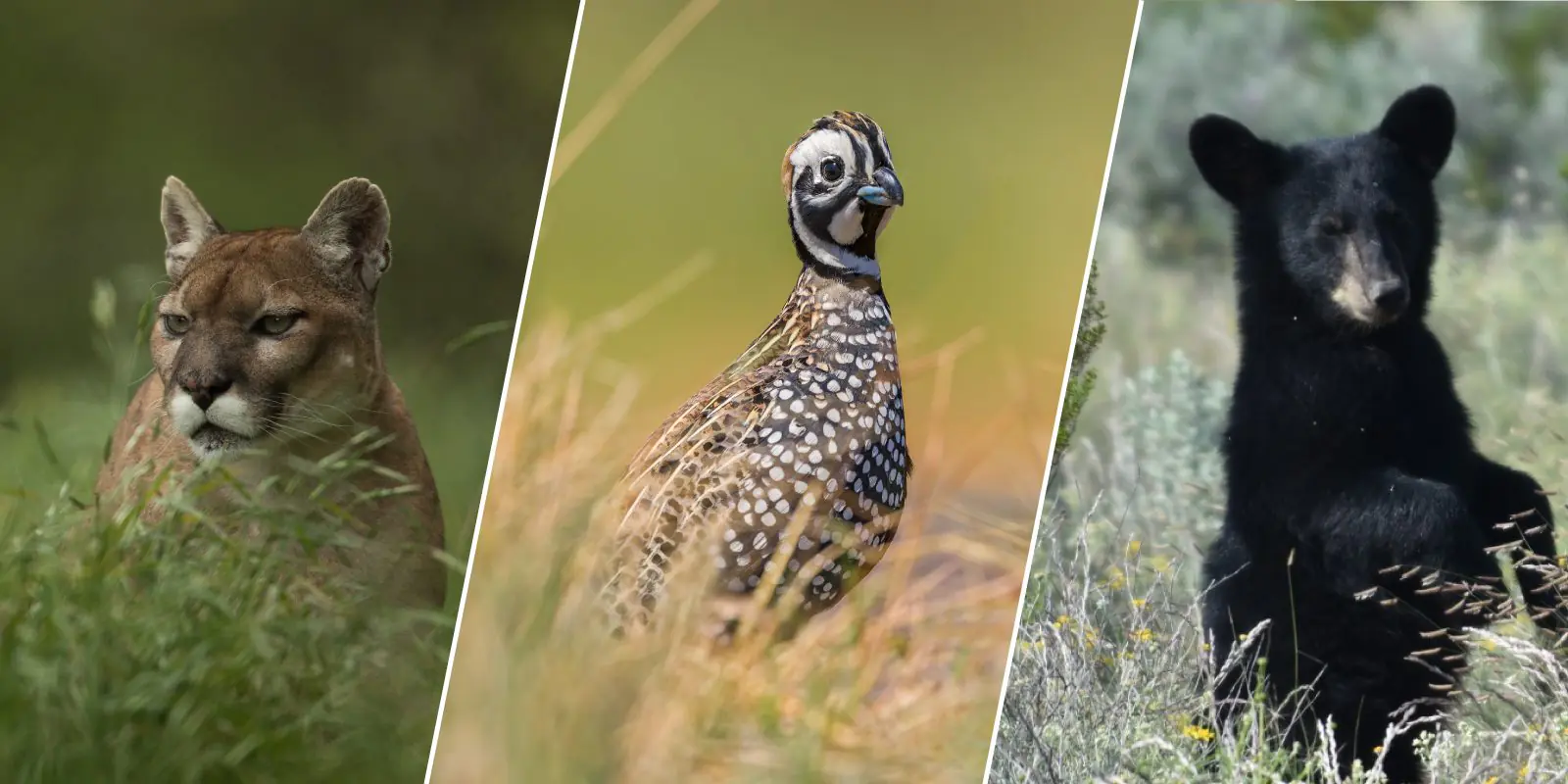
Session III focused on four very different non-game wildlife topics in the Trans-Pecos: mountain lion population monitoring, new techniques for detecting Montezuma quail, ongoing black bear research along the U.S.-Mexico border, and practical approaches for reducing conflicts between bears and people.
An Update on Mountain Lions in Texas
Richard Heilbrun of the Texas Parks and Wildlife Department provided an overview of what biologists know about mountain lions in Texas, and some of the questions they are still trying to answer.
Mountain lions are difficult and expensive to study. They are solitary and secretive, and research projects often produce small sample sizes. TPWD records show that most confirmed mountain lion sightings in Texas are in the Trans-Pecos, with another population in South Texas and occasional sightings in the central part of the state.
Heilbrun pointed to five studies where harvest rates exceeded thresholds that can raise population concerns. Those same studies also showed adult female survival below 80 percent, another level that warrants attention. But some of the research is now 20 or 30 years old, making it difficult to know how well it reflects today’s populations.
“So much changes,” Heilbrun said, pointing to prey availability, harvest, habitat quality and connectivity. “It’s really difficult for us to say, ‘This is what the lion population looks like now.’”
TPWD is working to fill those information gaps through research in South Texas and Val Verde County and through a mountain lion research and monitoring plan completed in late 2025. The agency also added voluntary mountain lion harvest reporting to its app. In 2024, the Texas Parks and Wildlife Commission prohibited canned hunting of mountain lions and established a 36-hour trap-check requirement.
Still, some fundamental questions remain unanswered.
“How many lions are in Texas?” Heilbrun said. “How many lions are harvested in Texas? Is that harvest sustainable? We just don’t know the answers to these questions.”
TPWD’s goal now is to gather enough information to better understand the mountain lion population in Texas. Heilbrun said that work will include landowners and producers, whose perspectives are part of the equation.
“We have to make decisions based on strong data in concert with producers and landowners,” said Heilbrun.
Using Sound to Detect Cryptic Birds in the Trans-Pecos
Dr. Ryan Luna focused on Montezuma quail, a species whose behavior makes it particularly difficult to find and study.
Montezuma quail are one of four quail species found in Texas and are primarily associated with higher-elevation habitats in the Trans-Pecos. When they sense danger, rather than immediately flushing, they often crouch and freeze.
“I’ve literally had them flush from between my feet, and I had no idea that they were anywhere around,” Luna said. “Which also makes me wonder how many times did we walk past them?”
That behavior makes traditional surveys difficult. Luna and his students are testing autonomous recording units, or ARUs, to detect the birds by sound without influencing their behavior. About the size of a game camera, the units record sounds that can later be analyzed using software to identify Montezuma quail calls.
Researchers are using the recordings to test habitat suitability models and learn when and where the birds are most vocally active. Luna said current data indicate the best detection period is during the first 30 to 90 minutes after sunrise, particularly from February through April.
The work could also help researchers estimate how many Montezuma quail are in the Trans-Pecos.
“Montezuma quail are one of those species that have no known population density estimate in any of the states where they occur,” Luna said.
Preliminary modeling from the Davis Mountains suggests populations can fluctuate dramatically with rainfall, from a little more than 5,000 birds after five years of drought to an estimated 15,000 to 20,000 in a year with good rainfall. Luna said the team expects to develop a population estimate across the Trans-Pecos and use the research to better understand habitat selection and management needs.
He closed by thanking the landowners who have provided access for the research.
“We can’t do anything without landowners willing to open their gates,” Luna said.
Black Bears in the Borderlands: Research Updates Along the US-Mexico Border
Caitlin Camp-Pappas, a graduate researcher with the Borderlands Research Institute, shared findings from two ongoing efforts, the Trans-Pecos Black Bear Monitoring Project and the Transboundary Black Bear Project.
Black bears were extirpated from Texas by the 1950s. Consistent sightings beginning in the early 1990s indicated they had returned, with populations expanding through natural migration from Mexico into Texas.
Since 2022, researchers have captured and collared 38 bears in Brewster and Terrell counties, including 22 males and 16 females. They have documented reproduction, mortality, seasonal behavior and movements across the border.
GPS data documented nine males and two females making transboundary movements. One subadult male captured near Sanderson traveled almost 100 miles into Mexico. Another adult male captured near Devils River State Natural Area traveled almost 60 miles into Mexico, returned to Texas and later made the trip into Mexico again.
Camp-Pappas said those movements are important to understanding the role of connectivity between Texas and Mexico. Researchers are also studying how border infrastructure could affect bear movement. At the time of the presentation, none of the collared bears had encountered a physical barrier because their crossing locations had only detection technology.
“We know the populations are sustained by dispersal from Mexico to Texas and maintaining populations in Texas because of that ability to cross the Rio Grande ,” she said.
Research is continuing through GPS collars, trail cameras and genetic work to better understand bear movement, population density and connectivity between Texas and Mexico.
Living with Bears
Texas Parks and Wildlife Department biologist Austin Bohannon followed with a look at what can happen when black bears encounter dumpsters, wildlife feeders, pet food and other attractants.
TPWD’s black bear database contained 479 statewide reports from 2000 through 2021. Bohannon said the total had since climbed to 1,065, with most reports coming from the Trans-Pecos.
“People are pretty bad at eating 100% of their food, and bears like to eat trash,” Bohannon said.
Bohannon outlined several ways to reduce bear conflicts, including bear-proof dumpsters, electric fencing and what he called “unwelcome mats.” Deer feeders, bird feeders, pet food and household garbage can all attract bears and may need to be secured.
Bohannon also explained why TPWD no longer routinely relocates problem bears. He described one bear that repeatedly raided dumpsters in Terlingua despite several attempts to haze it. TPWD eventually moved the bear to Black Gap Wildlife Management Area.
Within about six days, the bear had traveled 33 miles back toward the Terlingua area and resumed getting into dumpsters.
“We just essentially moved the problem to a different neighborhood,” Bohannon said.
Bohannon said TPWD has since been experimenting with trapping problem bears on site and using aversive conditioning rather than moving them elsewhere. He also encouraged landowners dealing with bear problems to contact TPWD.
“Biologists are here to help,” he said. “If you’ve got a situation, we’ve seen a lot in the past few years, so we can come out and help to the best of our abilities and try to get that figured out.”
Sponsors and Organizing Partners
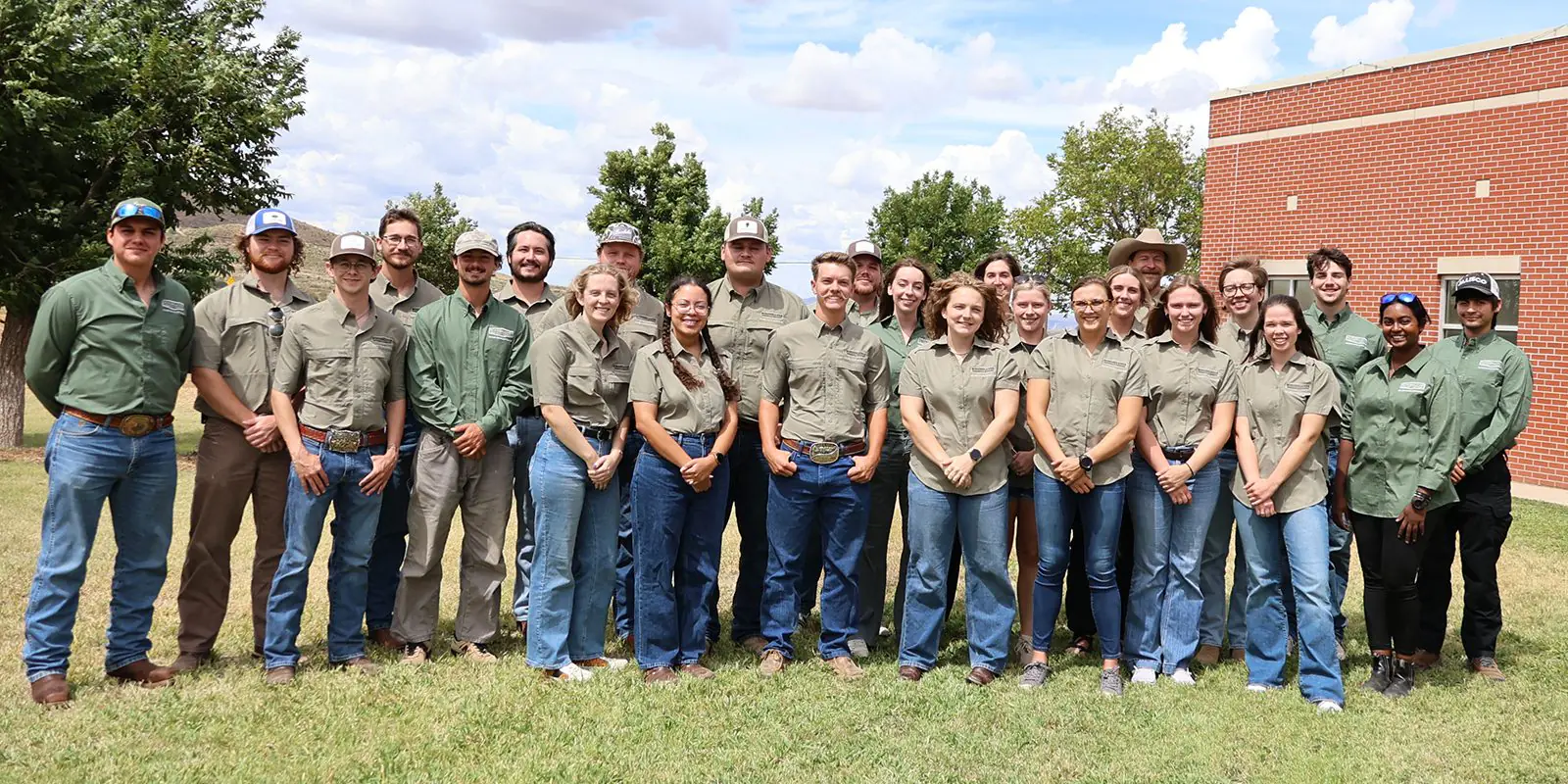
The 2026 Trans-Pecos Wildlife Conference brought together a collaborative team of organizing partners, including the Borderlands Research Institute at Sul Ross State University, Texas Wildlife Association, and Texas Parks and Wildlife Department.
The conference was made possible through the generous support of our sponsors: Dixon Water Foundation, ConocoPhillips, Corteva Agriscience, Alligare, No Big Bend Wall, and the Center for Big Bend Studies. We sincerely thank our sponsors for their commitment to advancing wildlife conservation and stewardship in the Trans-Pecos region.