Habitat Management and Land Stewardship
Trans-Pecos Wildlife Conference 2026
Aug. 6, 3:20 pm Session
The final session of the day turned to habitat and land stewardship, with four presentations focused on work underway across the Trans-Pecos. The speakers covered grassland birds, watershed restoration, lessons from habitat restoration in challenging environments, and what researchers are learning about cattle grazing in desert grasslands.
Restoring Grassland Birds by Removing Encroaching Brush
Dr. Maureen Frank opened with some basics about birds at the center of her research. Grassland obligates (animals that exclusively depend on grassland ecosystems to survive) need wide-open grasslands with very little brush, while grassland facultative species can make use of areas with more brush. Why? Because of woody brush encroachment, it’s the obligates that are experiencing some of the greatest declines. Some are declining by 3 to 4% a year, and the Chihuahuan Desert is especially important because so many of these birds spend the winter here.
“Nearly 90% of our grassland obligate birds that live in North America are spending the winter here in the Chihuahuan Desert,” Frank said. “So, our grasslands are vital for a large number of these species.”
As brush moves into grasslands, birds lose some of the grasses they rely on for seeds and for cover during cold winter nights. Even a small amount of brush can give predators a place to perch.
Frank and her colleagues wanted to know what happens when that brush is removed. Working on ranches in the Marfa and Marathon grasslands, they compared untreated areas with those treated with herbicide and areas where herbicide was followed by mechanical brush removal.
Herbicide alone didn’t produce the same shift toward a grassland bird community. Only the combination treatment did.
“Our takeaway is that you need that chemical and mechanical treatment to be able to restore grassland from a grassland obligate bird perspective,” Frank said.
The study included seven years of data. Frank noted that restoration can take time in the Trans-Pecos, especially when rainfall varies so much from one year to the next.
Watershed Stewardship and the Alamito Creek Conservation Initiative
Jared Schniers of the Borderlands Research Institute and Price Rumbelow of the Rio Grande Joint Venture brought the discussion down to the watershed level, focusing on erosion and ways to keep more water on the landscape.
Drought is part of the problem, but so is what happens when the rain finally comes. On bare or sparsely vegetated ground, heavy rain can quickly run off and carry soil with it. Over time, that erosion can deepen stream channels and lower the water table, leaving grasses and other plants with less access to water.
Schniers and Rumbelow described several low-tech approaches they are using to slow runoff, catch sediment and give water more time to soak into the ground. Techniques include brush weirs, one-rock dams, medialunas and Zuni bowls, small structures designed to stabilize eroding head cuts.
“We like to work as high up in the watershed as we can to start to slow that water down,” Rumbelow said.
These structures aren’t meant to stop the water—they slow it down. Sediment begins to collect, vegetation responds to the added moisture and, over time, the plants themselves help hold soil and slow runoff.
“Over time, your structures will kind of get covered up by vegetation,” Rumbelow said. “That’s a good thing.”
The Alamito Creek Conservation Initiative began in 2023. Since then, partners have worked on seven ranches, installed 120 structures along five miles of stream and treated about 6,000 acres of grasslands within the million-acre watershed.
Rumbelow said some perennial pools in Alamito Creek have disappeared during times of drought, adding urgency to the work.
“Part of the reason why we chose Alamito Creek is because we’re kinda right there on the cusp of losing a real gem to the area,” he said. “But we haven’t lost it yet. There’s still those perennial pools.”
Schniers encouraged landowners in the watershed who are dealing with erosion problems to connect with the initiative.
Habitat Restoration in Practice: Successes, Setbacks, and Lessons Learned
Dr. Carlos Gonzalez boiled much of what he has learned from several years of habitat restoration research down to something pretty basic: plants need water.
“Plants like water,” Gonzalez said. “Of everything we’ve done in the past few years, water is the key. In the desert, if you’re gonna do anything when it comes to restoration of habitat, it all starts with the water.”
One of the places Gonzalez and his students have worked in is southern Brewster County. They tried native grass seeding, brush management, and structures to slow and retain water. During the five years they worked on the property, it received less than three inches of rain a year.
“Grass grew, but only where it rained,” Gonzalez said.
That experience helped the researchers think more carefully about where to put restoration dollars and effort. Using satellite imagery and elevation models, they mapped how water moves across the landscape and identified places where restoration had a better chance of working.
They also looked at what nearly 400 trincheras were doing on one property. Measurements from a sample of those structures allowed Gonzalez to estimate that about 750 cubic yards of soil had been retained on the landscape, the equivalent of roughly 65 dump-truck loads.
Another project took the team to caliche pads associated with oil and gas development. Seeding alone produced about 14% soil cover. When researchers added a soil erosion blanket, cover increased to nearly 35%.
The blankets didn’t greatly change how much water the soil could hold. The bigger difference was how long that moisture stayed there. Gonzalez said the treatment extended the amount of time moisture remained in the soil above a threshold favorable for seed germination by about 70%.
“Take-home message: focus on the water,” Gonzalez said. “Everything else will help. We’ll add a little bit on top of things, but it’s not what makes the biggest return on investment when it comes to restoration.”
He ended with three basic points.
“Keep the water on the site. Protect the soil surface,” Gonzalez said. “Match the action to the place of what you’re trying to achieve.”
Cows and Desert Grasslands: What We Learned from Grazing Management Research
Dr. Silverio Avila closed the session with cattle, one of the management strategies available to land managers working to maintain healthy rangelands and wildlife habitat.
“Cows are a very important tool for grassland or rangeland management and wildlife habitat management,” Avila said.
But grazing cattle in the Chihuahuan Desert is different from grazing in wetter parts of Texas. Rainfall varies widely, forage production is relatively low, and the growing season can be limited to roughly 80 to 100 days. That means stocking rates need to be conservative, and ranchers need to be ready to adjust as conditions change.
Avila shared results from research at the Dixon Water Foundation’s Mimms Unit near Marfa. Researchers compared adaptive multi-paddock rotational grazing, continuous grazing, and areas where cattle were excluded.
When they looked at forage biomass, they found no statistically significant differences among the grazing systems. Rainfall and soil type mattered more.
“For this study, in one specific ranch, the grazing system did not matter as much as soils and rainfall,” Avila said.
The differences from year to year illustrated the effects of changing conditions. Forage production was higher in 2023 and fell during the 2024 drought. The ranch destocked its cattle in response, and there were no cattle on the study site in 2025.
“In order to be sustainable and keep those grasslands in pristine condition, destocking was the proper decision to make,” Avila said.
Avila also shared preliminary data on plant diversity. The grazed areas had higher plant species counts than areas where cattle were excluded, although he stressed that those data had not yet undergone statistical analysis.
“Grazing increased the plant species richness compared to no grazing,” he said.
And there are limits to what can be drawn from the research so far. The results come from one ranch and three years of data. Avila said more work is needed on other properties, soil types and grazing systems.
“We can’t really rely on just one property,” he said.
Sponsors and Organizing Partners
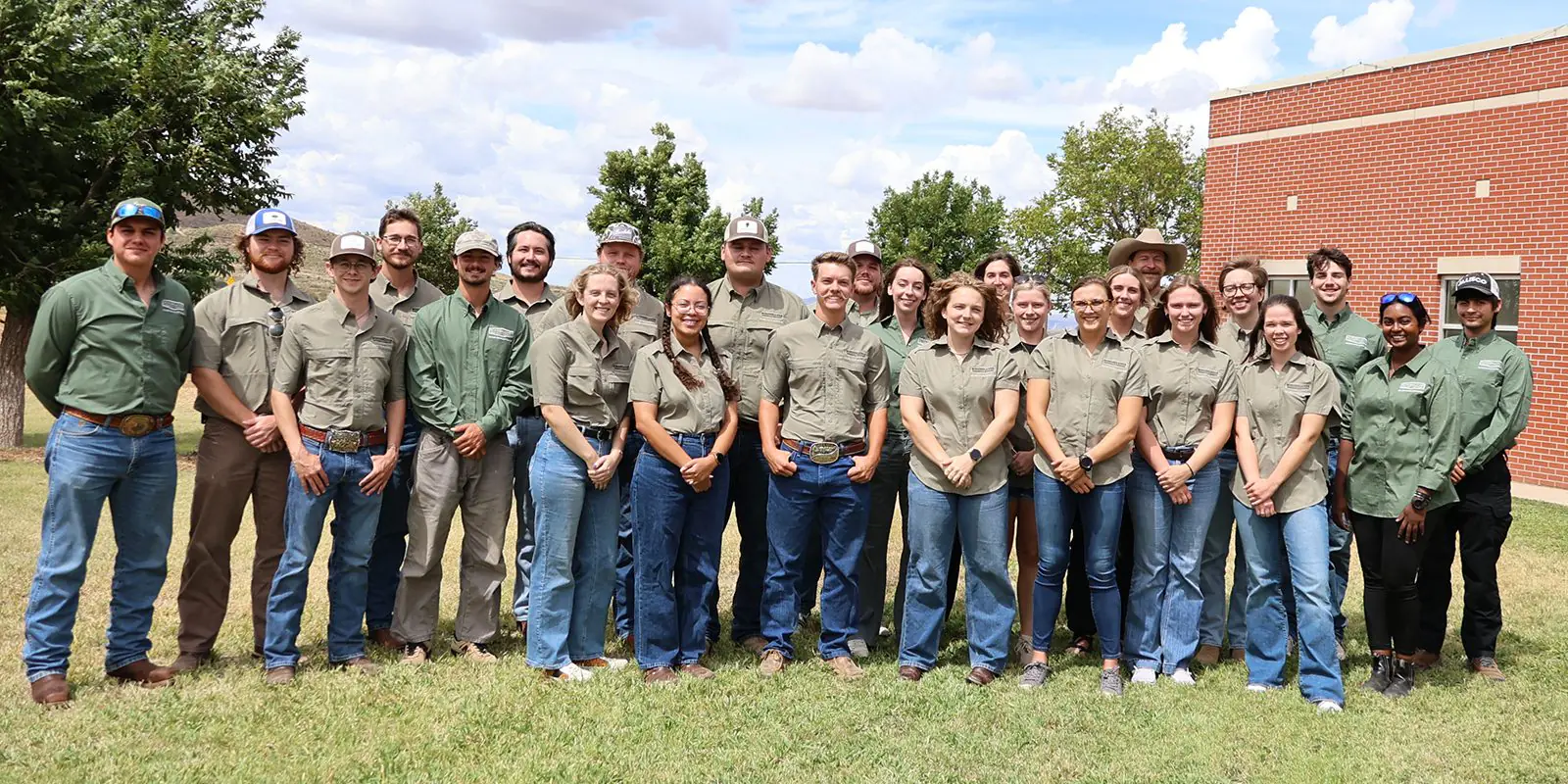
The 2026 Trans-Pecos Wildlife Conference brought together a collaborative team of organizing partners, including the Borderlands Research Institute at Sul Ross State University, Texas Wildlife Association, and Texas Parks and Wildlife Department.
The conference was made possible through the generous support of our sponsors: Dixon Water Foundation, ConocoPhillips, Corteva Agriscience, Alligare, No Big Bend Wall, and the Center for Big Bend Studies. We sincerely thank our sponsors for their commitment to advancing wildlife conservation and stewardship in the Trans-Pecos region.