
Our Work
Field-based research, education, and partnerships advancing wildlife conservation and resilient landscapes across the Borderlands.
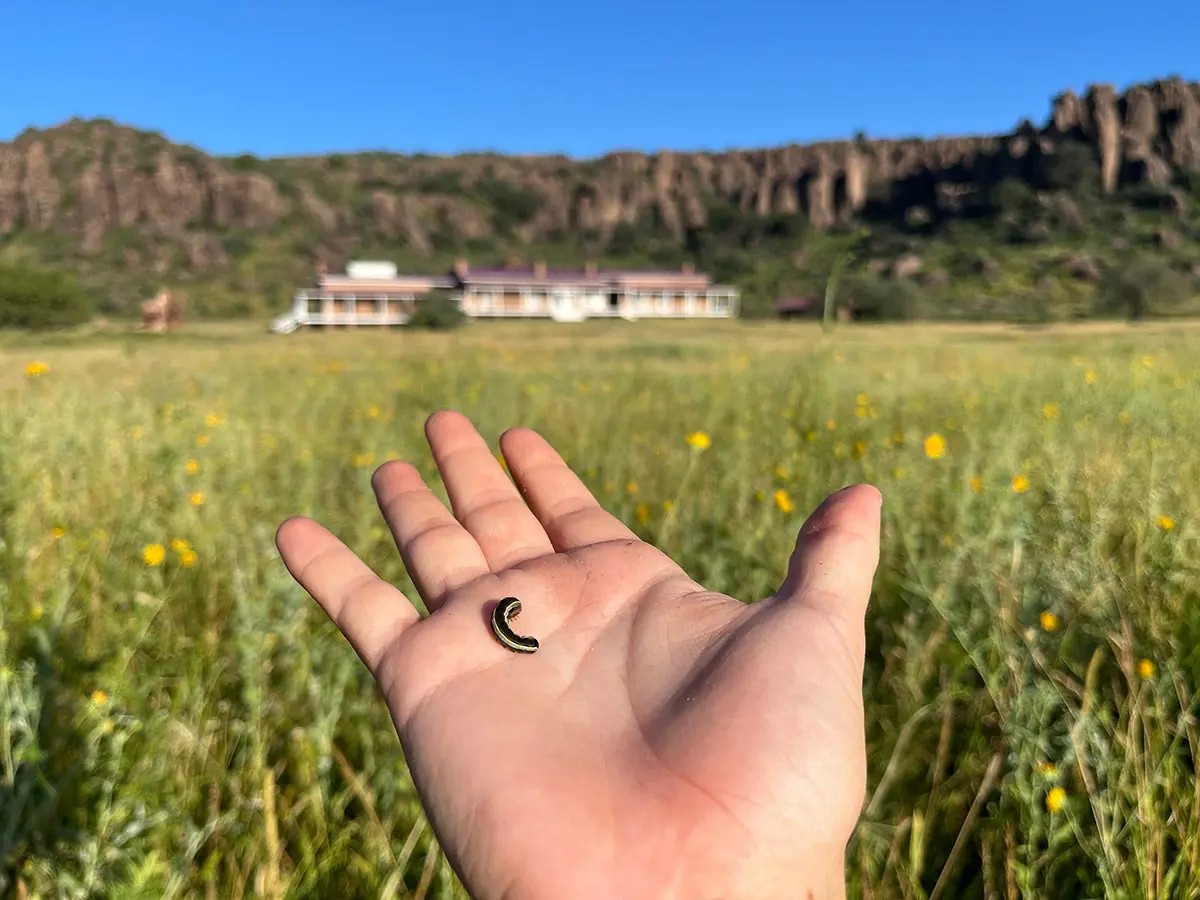
Grassland habitat for pollinators under different mowing regimes at Fort Davis National Historic Site
By: Eliana Goodwin, Dr. Maureen Frank, Dr. Antonio Cantu, and Dr. Christopher Ritzi
At a historic site where mowing is necessary for human use of the space, what mowing schedule is best for pollinators?
Nearly 90% of all wild flowering plant species are reliant on biological pollination, meaning that animals carry the pollen from one flower to another. Insects carry out the majority of this type of pollination. Plant-pollinator mutualisms drive plant diversity and create resilient habitat for wildlife. A diversity of plants on the landscape reduces ecosystem vulnerability during periods of environmental stress, which is an especially relevant consideration in drought-prone environments. Thus, pollinator conservation is crucial to sustaining thriving ecological systems in arid regions.
Arid grasslands, such as those in the Chihuahuan Desert, are hotspots for many pollinators. North America has lost 60% of its grassland biome, and in Texas, only 18% of historic native grasslands remain. This decline affects native pollinators associated with grassland habitats. In addition to habitat degradation and destruction, insects are threatened by agricultural and residential pesticide use, pathogen spread, competition with introduced species, and changing climatic conditions. As human activity continues to dominate landscapes, semi-natural grasslands serve as increasingly important refugia for pollinating insects, acting as population sources for degraded or cultivated areas. The intentional and science-based management of these areas can support or reestablish diverse pollinator communities.
Fort Davis National Historic Site is a small-scale, semi-natural grassland managed via mowing. While high-frequency mowing may detrimentally impact plant biomass and flower production, intermediate mowing may be beneficial for pollinators by stimulating plant growth. At FDNHS, managers implemented four treatments to study how these mowing practices may impact insect pollinators and the plants they are reliant on for food and shelter. We aim to assess and describe the existing plant and pollinator communities present in each treatment area. Then, we will quantify the relationships among mowing treatment, vegetation cover and composition, and pollinator diversity and abundance. The results of this study will inform future management plans that support habitat for native pollinators.