Expanding Horizons: Changing the Future of Gamebird Science
Since its inception, the Borderlands Research Institute’s Game Bird Program has been focused on the unique game bird species that call the rugged landscapes of the Trans-Pecos home, where mountains, grasslands, and high deserts intersect. This region provides critical habitat systems for a range of species, including Montezuma quail, scaled quail, and wild turkey. By studying these birds over such varied terrain, researchers are beginning to understand how habitat and land management shape their populations in West Texas.
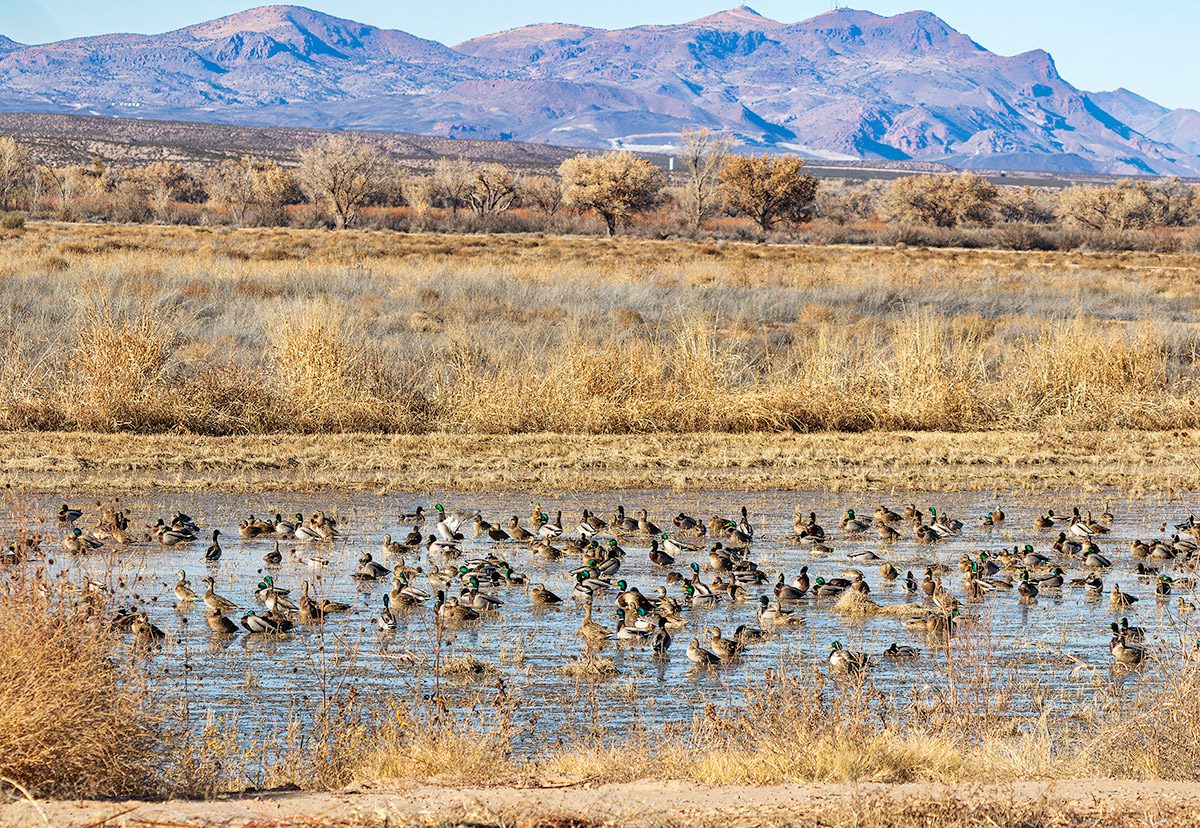
Within the past year, the Game Bird Program has broadened its scope to include waterfowl and waterbird research, expanding its reach across the United States to encompass important wetland systems, including wetlands in the Trans-Pecos. New focus species include sandhill cranes, northern pintail, cinnamon teal, redhead ducks, and Mexican ducks. These projects will collect data throughout the species’ annual cycle (i.e., breeding, migration, and overwintering) and apply innovative use of the data collected and how it is analyzed. For example, redhead ducks are part of a pilot study using a combination of implanted tracking devices and Human Mobility Data to investigate influences of human disturbance on daily movements and habitat use. Additionally, efforts for banding and monitoring Mexican ducks within the Trans-Pecos are connecting research efforts across borders.
Alongside these research advancements, the department is undergoing key leadership transitions. Dr. Ryan Luna has stepped down as Natural Resource Management department chair after a productive, eight-year term, to focus more fully on quail and turkey conservation research. Dr. Maureen Frank will step into a leadership role as Natural Resource Management program director, while Dr. Carlos Gonzalez will assume the role of department chair.
BRI faculty are continuing to assume impactful administrative roles, while also expanding the scope of species we are targeting for research projects. Dr. Dan Collins, who recently joined BRI, brings his expertise in wetlands research and is expanding the institute’s footprint and ability to address waterfowl and waterbird conservation efforts.
Together, these efforts signal BRI’s dedication to broadening the Game Bird Program, which continues to evolve with the landscapes it studies.